Design Ideas and Random Thoughts
Read Time: 5 min
Quote of the week:
“The details are not the details. They make the product.” Charles Eames
Made me think:
🧠 The Lindy Effect - The longer something has already lasted, the longer it is likely to keep lasting. The idea started in a New York deli. In 1964 the writer Albert Goldman published “Lindy’s Law” in The New Republic, named after Lindy’s on Broadway, where comedians gathered after shows to pick over who was on the way up and who was finished. The mathematician Benoit Mandelbrot later gave it a formula, and Nassim Taleb made it famous in Antifragile. For anything that doesn’t wear out with age, like a book, a recipe or a silhouette, every year it survives adds to its life expectancy.
The Yellow Boot That Became New York
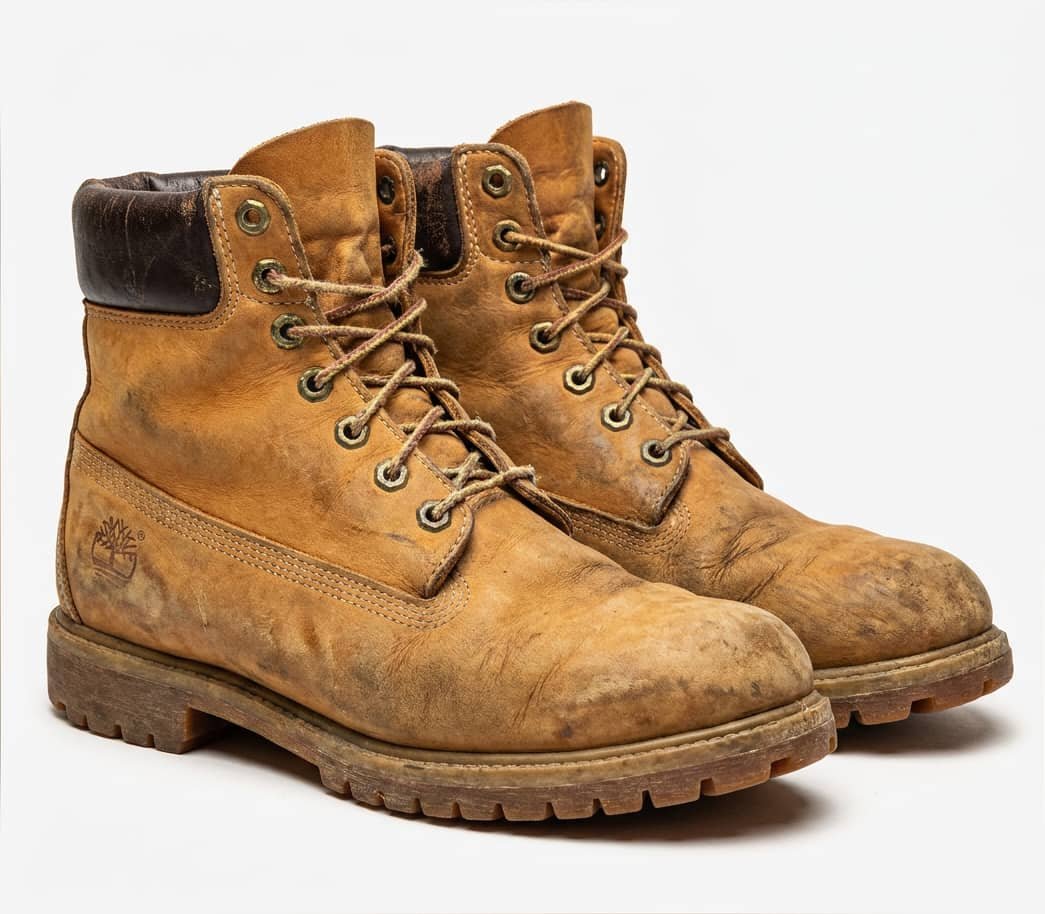
In 1973, a family shoemaker in a riverside mill town in New Hampshire launched a work boot for loggers, builders and anyone else who spent New England winters outside. Twenty years later, it was the unofficial uniform of New York hip-hop, the most wanted boot in Milan and, by one account, the best-selling boot in Italy. The company that made it spent a good part of the 1990s trying to work out what had happened.
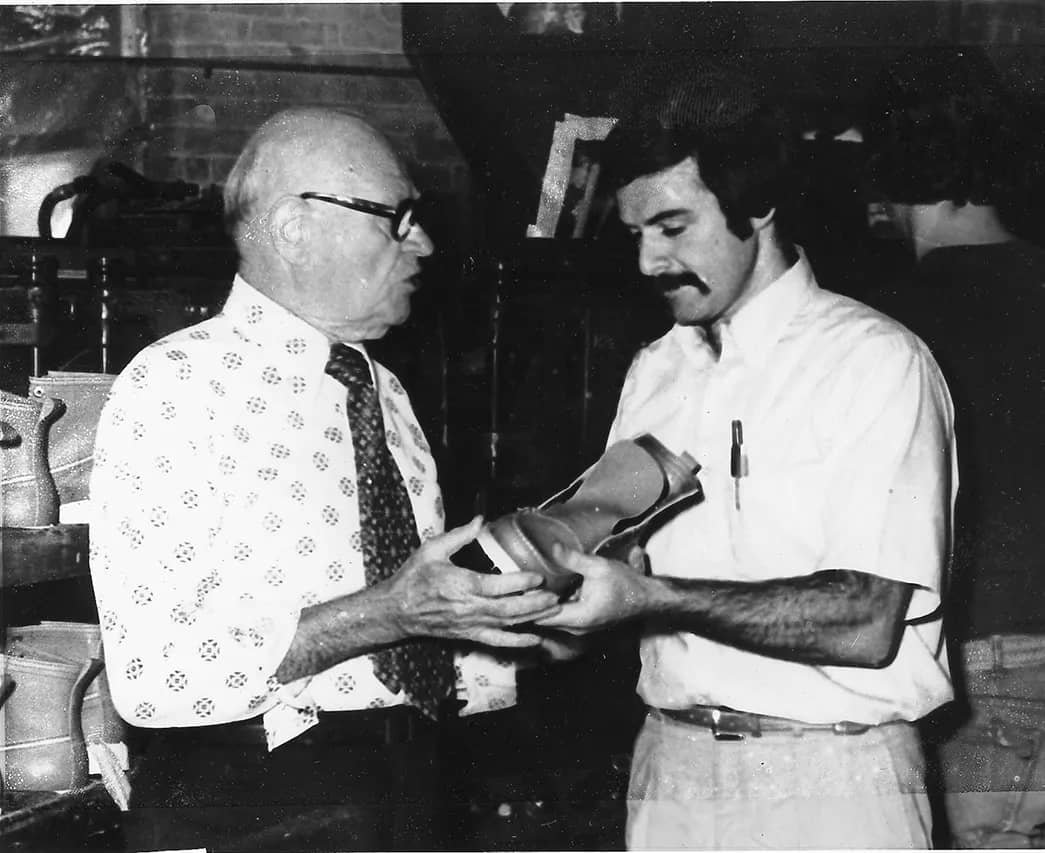
Nathan Swartz (left) and his son Sidney
The shoemaker. Nathan Swartz was a Jewish immigrant from Odesa who started making shoes in America in 1918. In 1952 he bought half of the Abington Shoe Company, a Boston maker of private-label boots and shoes for other brands, and by 1955 he owned all of it, with his sons Sidney and Herman alongside him. In 1969 the family moved production into an old mill in Newmarket, New Hampshire, and turned their attention to one problem: keeping New England feet dry.
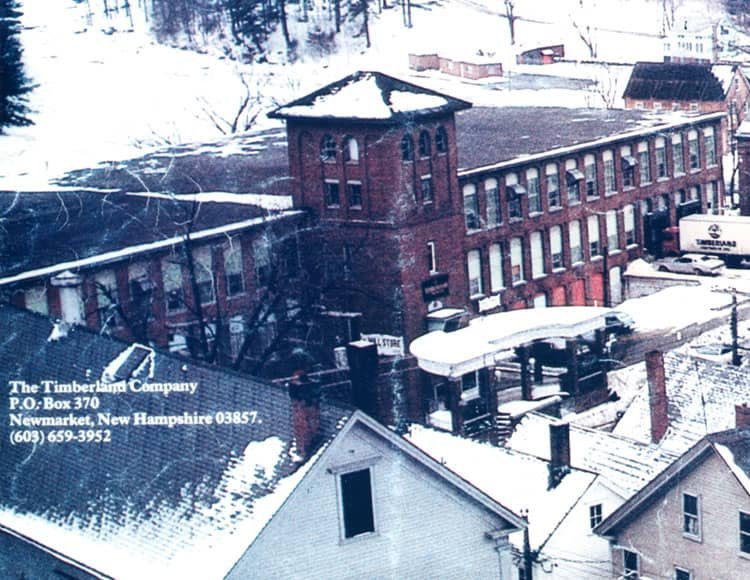
The Newmarket factory, New Hampshire. Credit: Timberland archive
The problem. A leather boot leaks for two reasons. The leather drinks water, and the stitches that hold the sole to the upper are a row of tiny holes. Timberland’s own version of the story credits a factory worker who started slathering silicone on his boots to keep his feet dry. That gave the Swartzes the first half of the answer: nubuck impregnated with silicone. The second half was injection moulding. Instead of stitching a sole on, they moulded it directly onto the upper, so the two became one piece with no needle holes at the weak point.
People in the trade thought Sidney had lost it. “You’ll ruin the leather,” he was told. He did it anyway, and then did something else nobody was doing on a work boot: he put the brand’s tree logo on the outside.
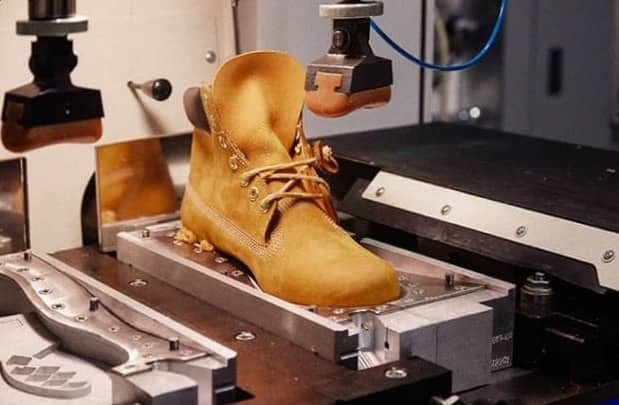
The sole being injected directly to the upper. Credit: Timberland
This is the bit for the shoemakers. The original 1973 boot was 8 inches tall and was simply called “The Timberland”. The 6-inch version we all know arrived three years later. The 1978 catalogue lists the spec like a manifesto:
• full-grain leather, silicone-impregnated to beat military waterproofing standards by at least double
• a midsole heat-sealed to the upper
• a permanently bonded lug sole
• multiple rows of nylon stitching with every seam sealed
• a double foam-padded leather collar
• solid brass eyelets
• a tempered steel shank
Every part of the boot was designed around one job: keeping water out.
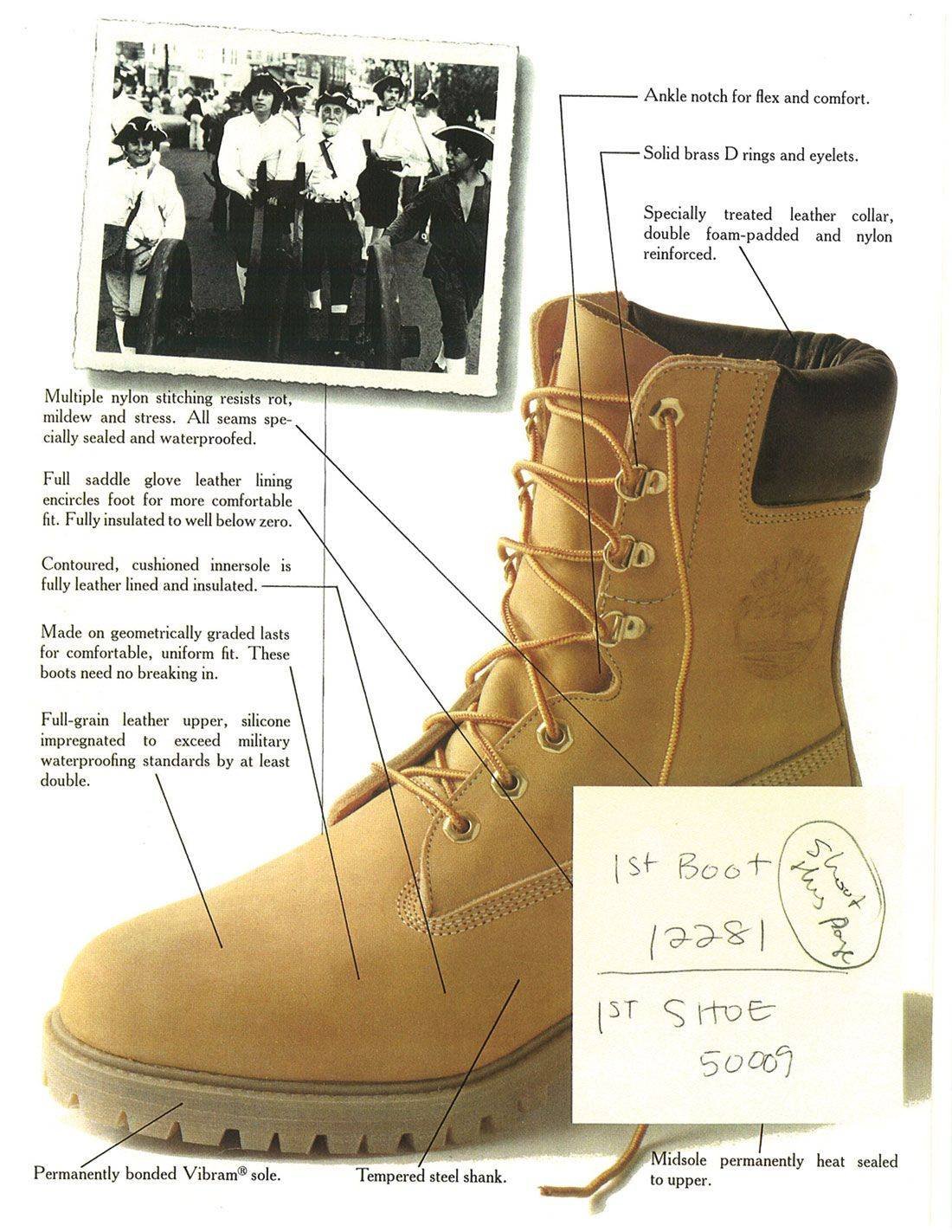
Timberland catalogue, 1978. Credit: Timberland
And the testing was gloriously low-tech. According to Timberland, the ultimate test was to weigh the boots down with rocks and sink them in a factory toilet.
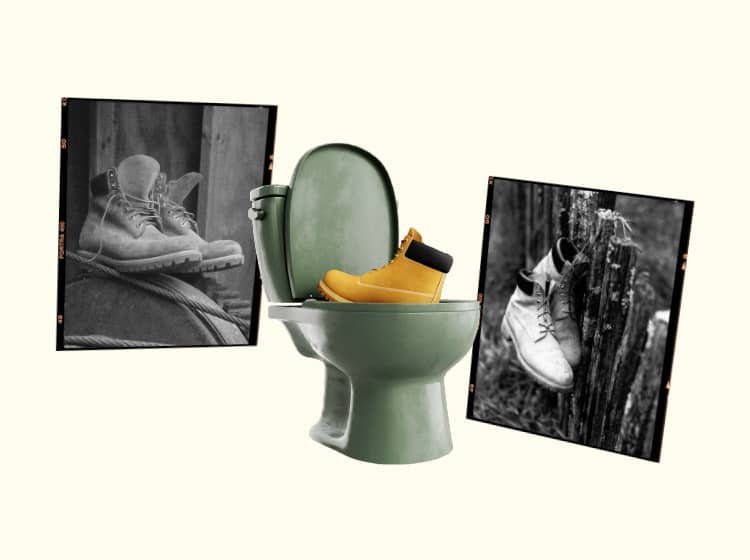
The toilet test. Credit: Timberland
It worked. Sales of the boot grew so fast that in 1978 the Abington Shoe Company renamed itself after it: The Timberland Company.
First, Milan. The boot’s first life outside the job site wasn’t in America at all. In the late 1970s an Italian distributor, Giuseppe Veronesi, visited the factory and ordered several thousand pairs. By the mid-1980s the paninari, the Milanese teenagers named after the sandwich bars they hung out in, had made Timberland boots part of a uniform of puffer jackets, rolled-up jeans and American brands. They looked foreign, which in a city built on tailoring was exactly the point. Reports at the time even described kids being robbed for their Timberlands in Milan.
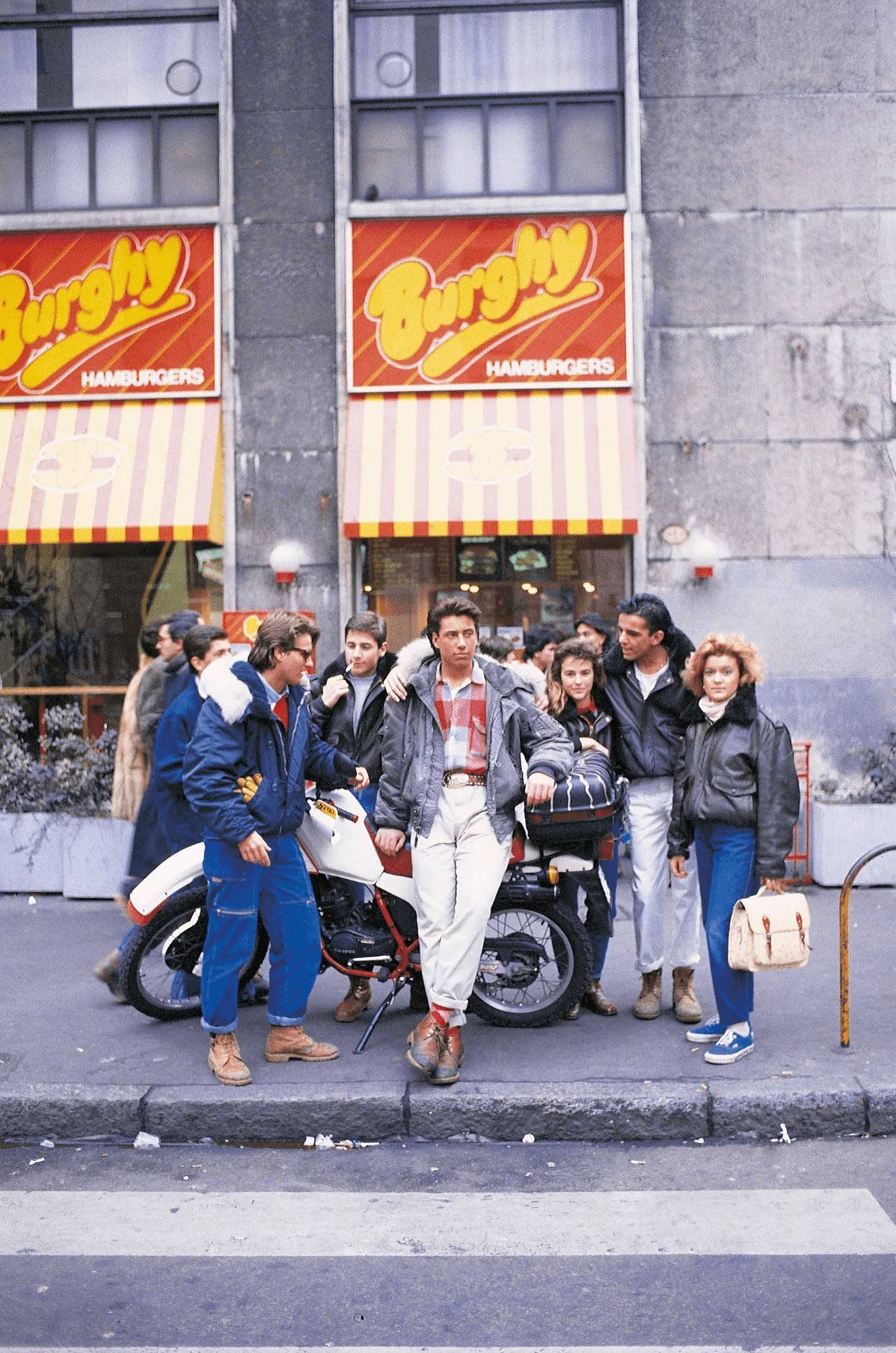
Paninari outside Burghy, Milan. Credit: Getty Images
Then, New York. Timberland was selling in Saks Fifth Avenue and advertising in The New Yorker by the mid-1980s, and opened a store on Manhattan’s Upper East Side in 1989. But the customers who made it famous in the city weren’t the ones it was advertising to.
The story usually told, and repeated in Rob Walker’s book Buying In, is that the first city buyers were street-corner dealers. They stood outside all night through New York winters and needed the best waterproof boot money could buy, and they had the money. They were also the neighbourhood’s style setters. From the corners, the boot went into hip-hop. Through the early 1990s, Wu-Tang Clan, Mobb Deep, Nas, Boot Camp Clik and DMX (who reportedly claimed to own 1,500 pairs) wore them on stage and in videos. Biggie name-checked Timbs for his Brooklyn crew in 1997’s “Hypnotize”.
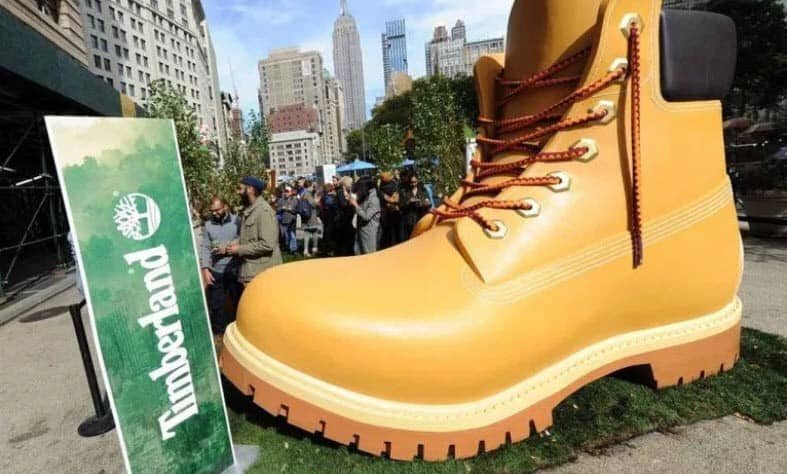
Timberland's 13-foot yellow boot in Manhattan's Flatiron District, 2018.
New York gave the boot new names. Timbs. Butters. Wheats - A crisp, unscuffed pair worn with baggy denim became a status signal. The boots came out in October and didn’t go back in the cupboard. They were practical for the slush, tough enough for the city, and a nod to the working men they were built for, all at the same time. A boot designed in New Hampshire had become a piece of New York identity.
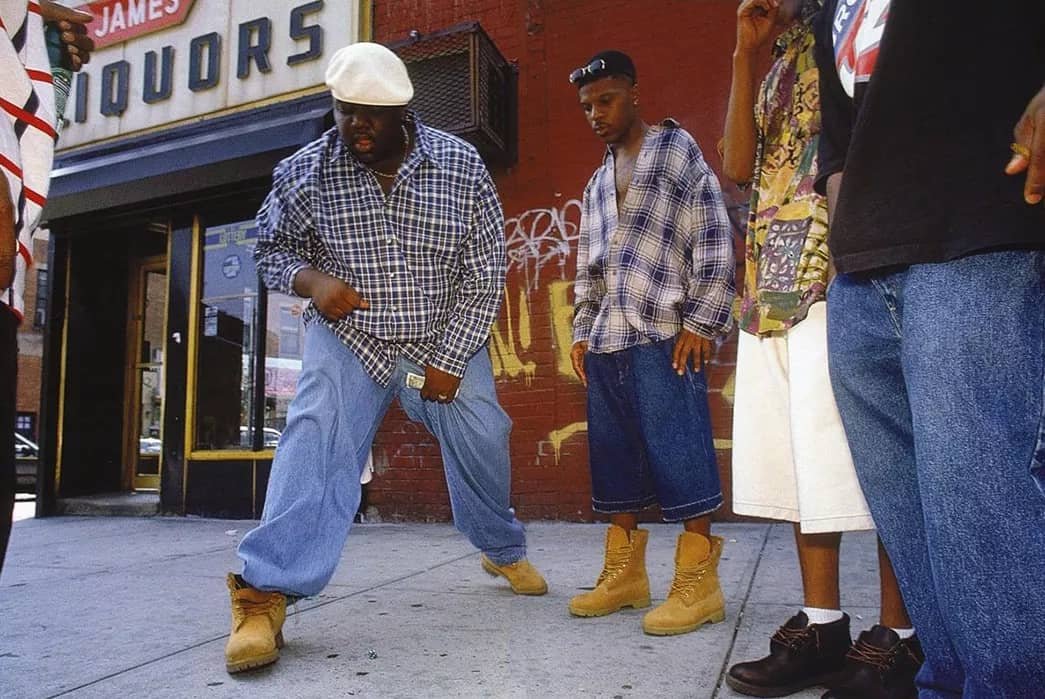
The Notorious B.I.G. (left, in the white cap) and friends in Timbs, Brooklyn
The awkward bit. Timberland didn’t handle it well at first. In a November 1993 New York Times piece on outdoor brands crossing over to Black and Hispanic city kids, Jeffrey Swartz, Nathan’s grandson and then the company’s executive vice president, said Timberland concentrated its marketing on “honest working people” and that the urban market wasn’t “sustainable”. The backlash was immediate. Some Black artists publicly dropped the brand. Swartz replied with an op-ed in the Amsterdam News, the Black-owned New York paper, denying any racism, and pointed to the company’s “Give Racism the Boot” campaign. He met with Black community leaders. In the end the controversy had little effect on sales, and the company gradually began to embrace the customers who had made it famous.
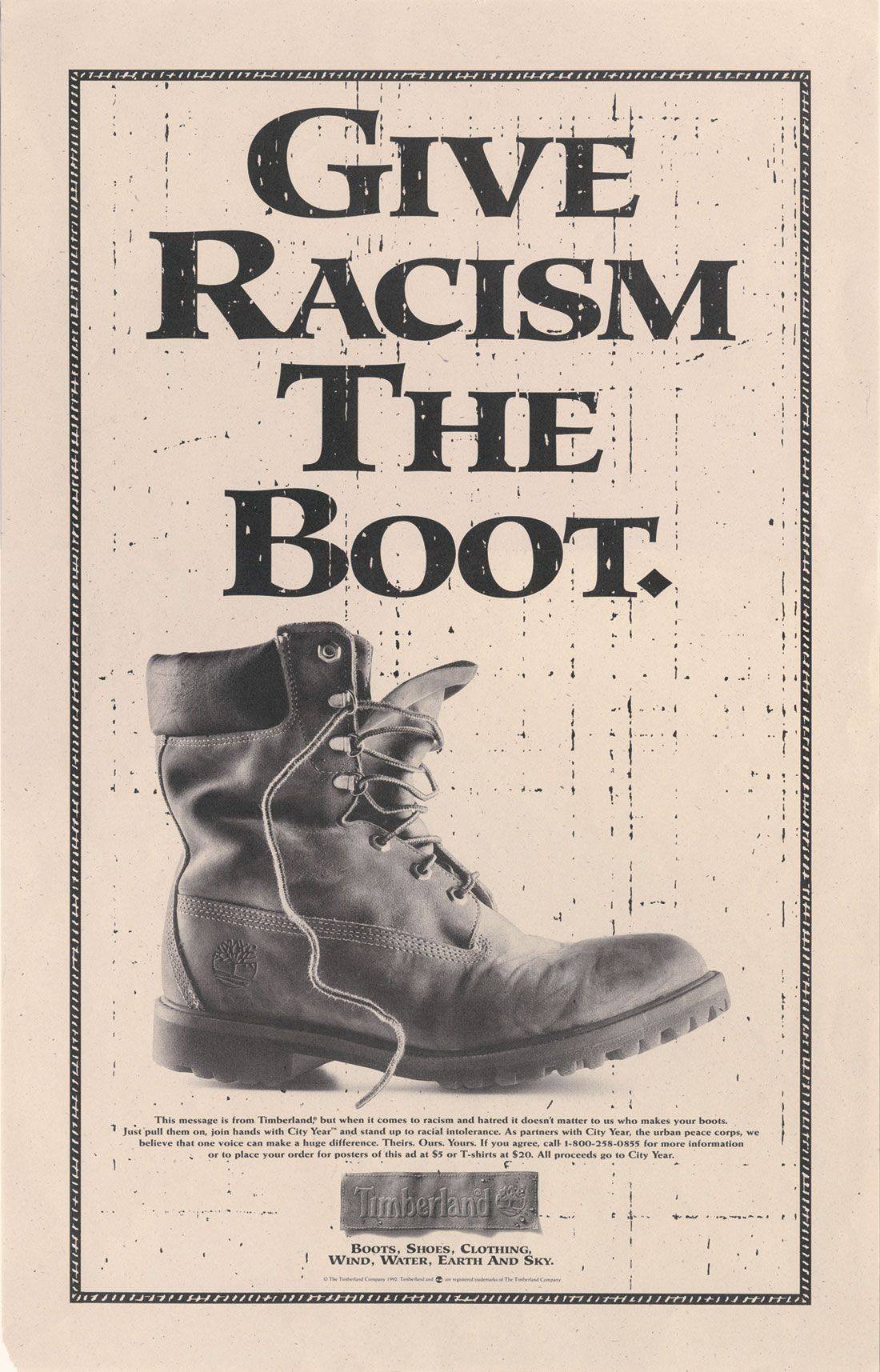
Credit: Timberland archive
What happened next. Revenue passed $1 billion by 2000. New York’s David Z store did Timberland’s first collaboration in 1998, and the list since runs from Supreme to Jimmy Choo to Louis Vuitton. In 2011 VF Corporation, owner of The North Face and Vans, bought Timberland for $2.3 billion. The Museum at FIT in New York has the boots in its collection. And the 6-inch is still made to the same basic recipe: waterproof nubuck, a sealed construction, a padded collar and a lug sole.
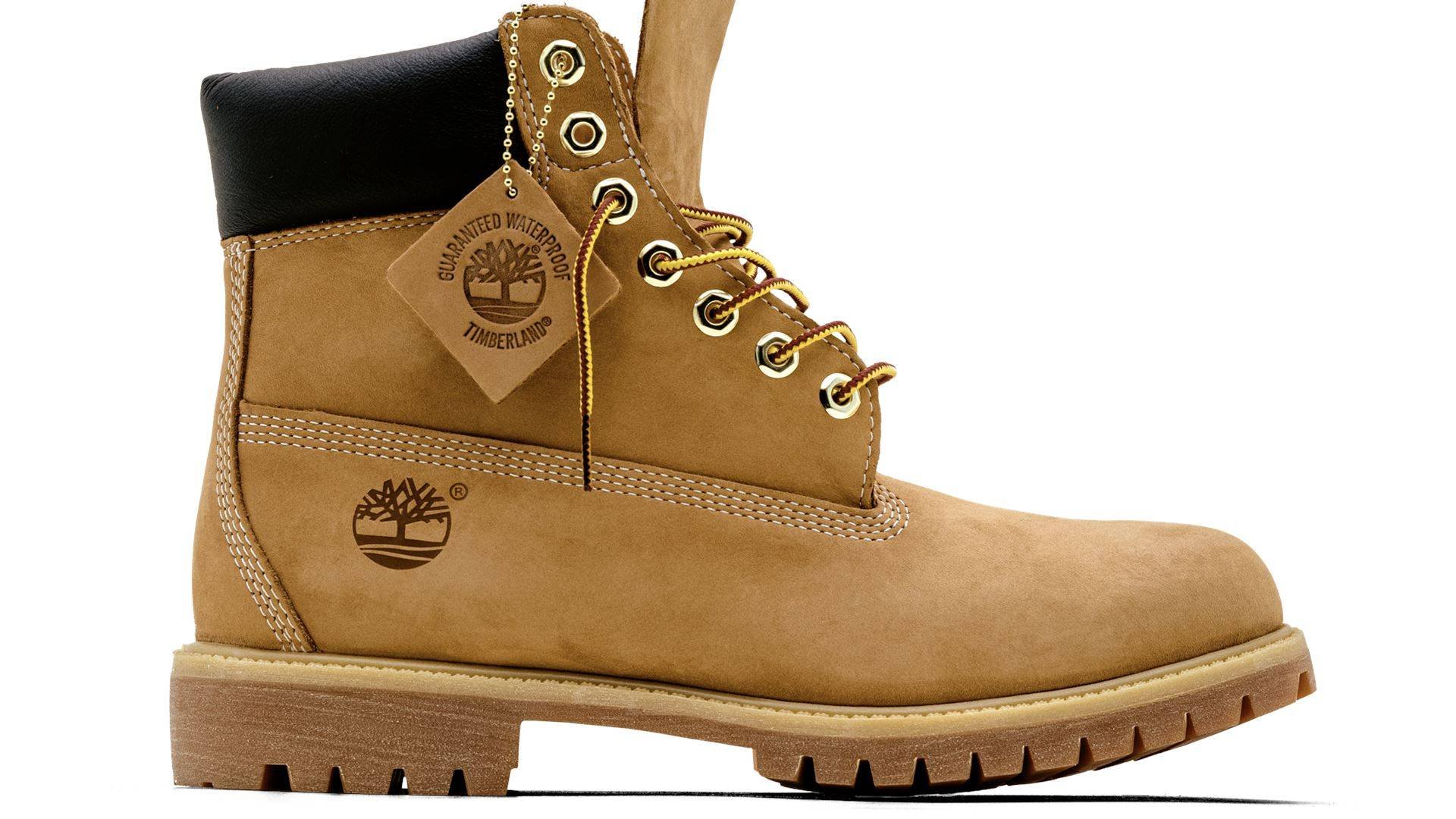
The classic Timberland
Nobody at Abington designed the Timberland to be a symbol of New York. They designed it to survive a toilet. The city did the rest.
Question to ponder:
Timberland engineered the boot, but it was the people who wore it who decided what it meant. Milanese teenagers, New York corners, Brooklyn rappers, London ravers. Each gave the same object a different identity, and for a while the company wasn’t sure it wanted any of them.
In your own work, who decides what your product means? And when an unexpected customer adopts it, do you lean in, or hold on to the brief?
My Recommends this week:
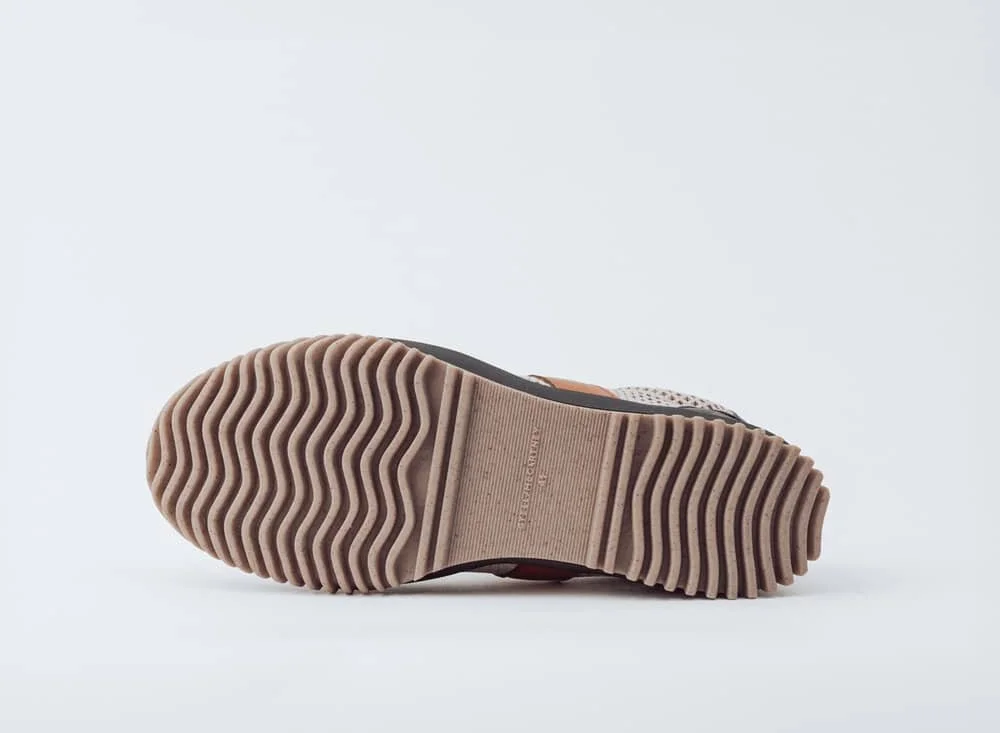
🌱 Balena: A material science company making plant-based, compostable and recyclable materials for soles. Their BioCir Flex, made from sources like castor beans, is in Stella McCartney’s S-Wave trainer. It’s dyed with cinnamon waste, so it smells of cinnamon.
👉 Check it out here
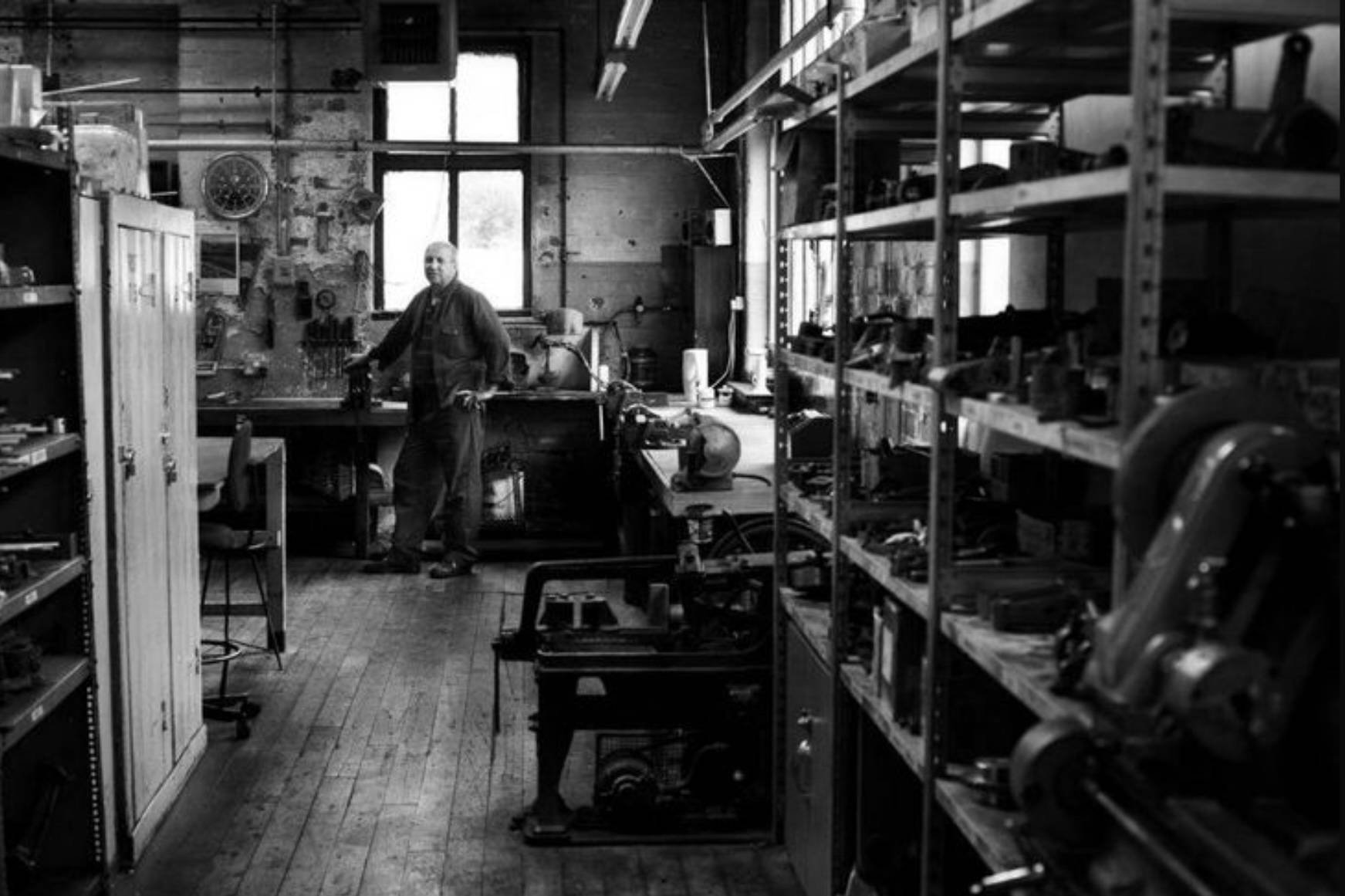
🎬 The Makers of E. Tautz: Patrick Grant takes a BAFTA-winning documentary-maker on an eight-day, 2,500-mile tour of the British mills and workshops behind his clothes. Great insight into Savile Row and the artisans who keep it going.
👉 Watch it here
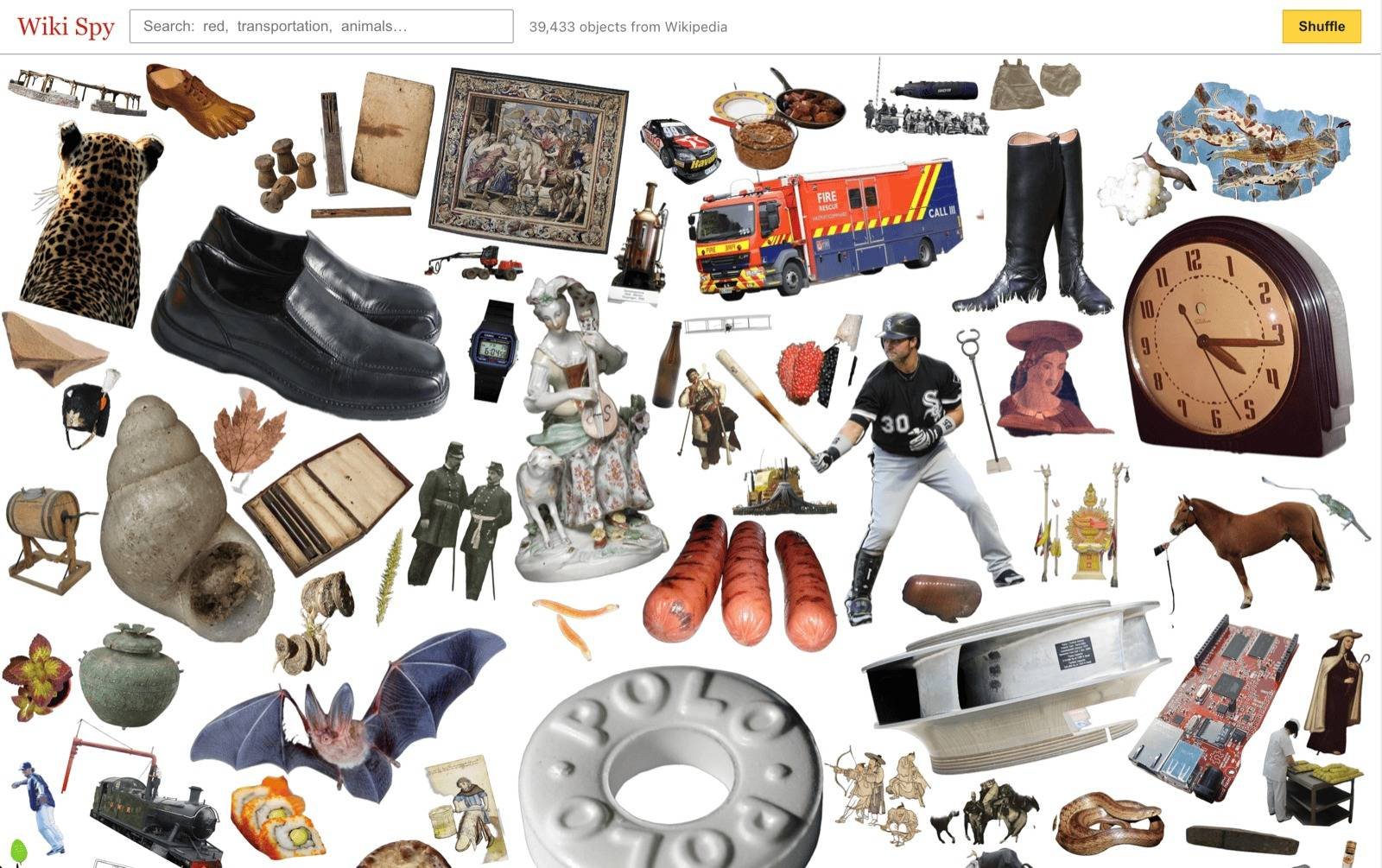
🔎 Wiki Spy: Neal Agarwal has cut out nearly 44,000 objects from Wikipedia images and thrown them into one endless I-spy collage. Search by colour or theme, or just shuffle. An endless visual smorgasbord, and dangerous for mood boards.
👉 Check it out here
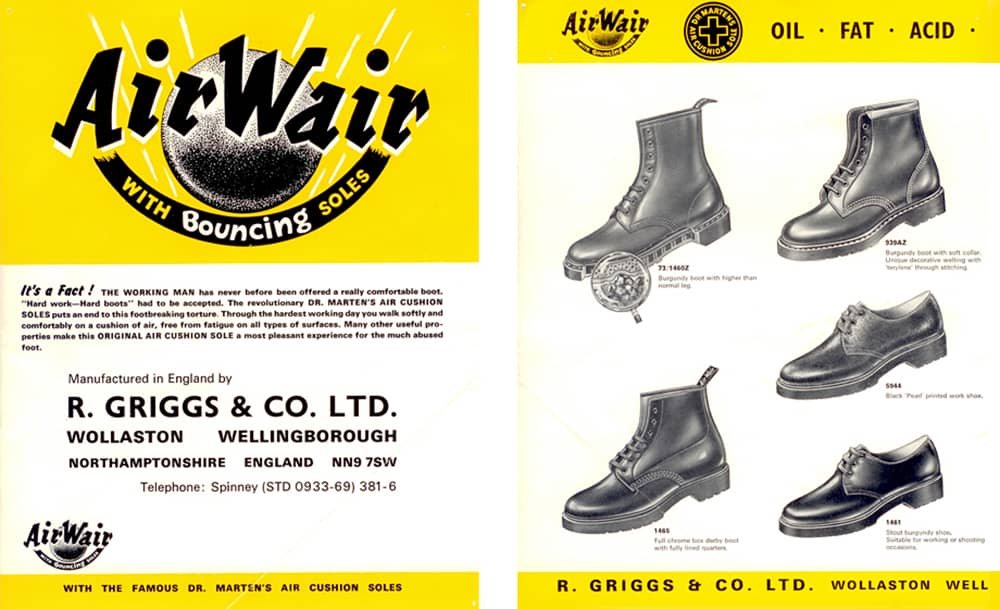
👟 If you liked this... You’ll enjoy the story of Dr Martens and Solovair, another work boot that found a second life in subculture.
👉 Check it out here
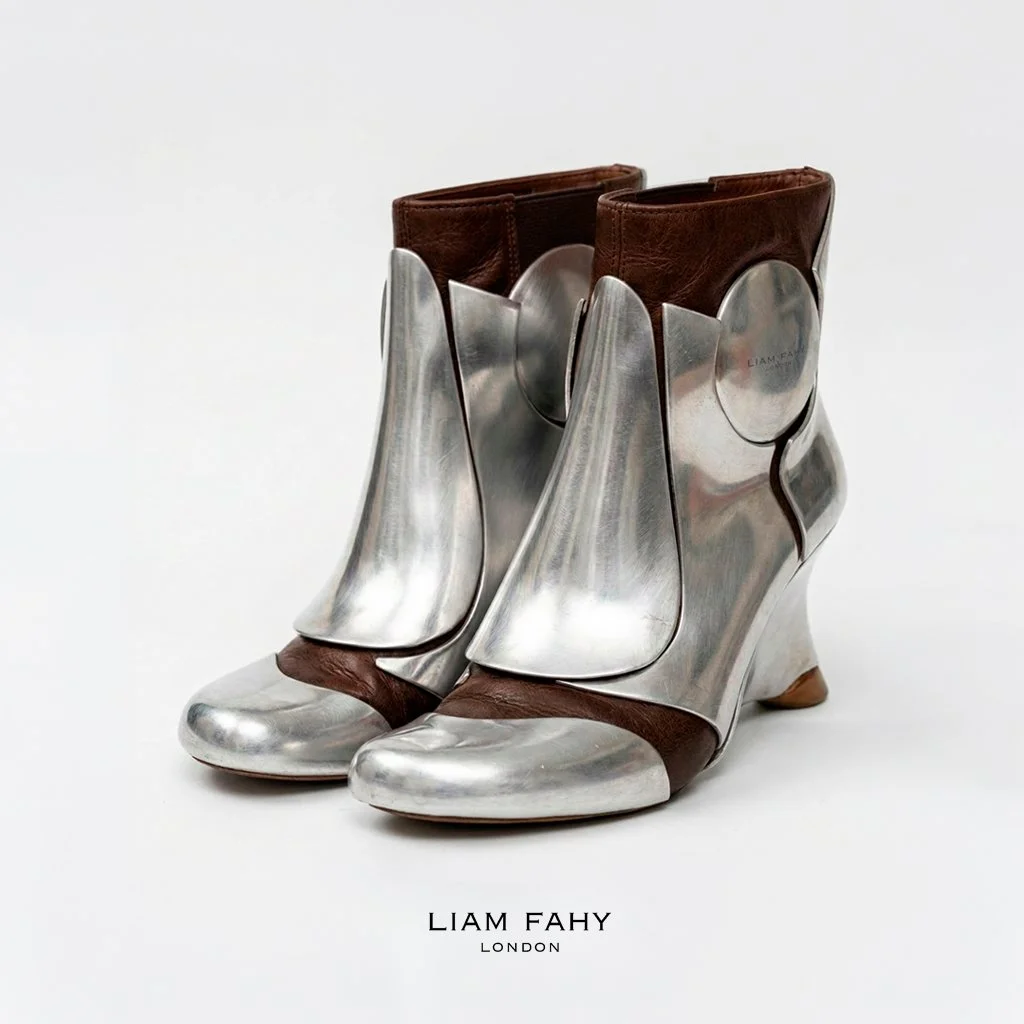
👟 Footwear Prototypes: For a deep dive into innovative footwear design, original concepts, unique materials and design strategy, follow my LinkedIn feed