Ferragamo's Rainbow Platforms, Functional fixedness and Luigi Colani.
Design Ideas and Random Thoughts
Read Time: 4 min
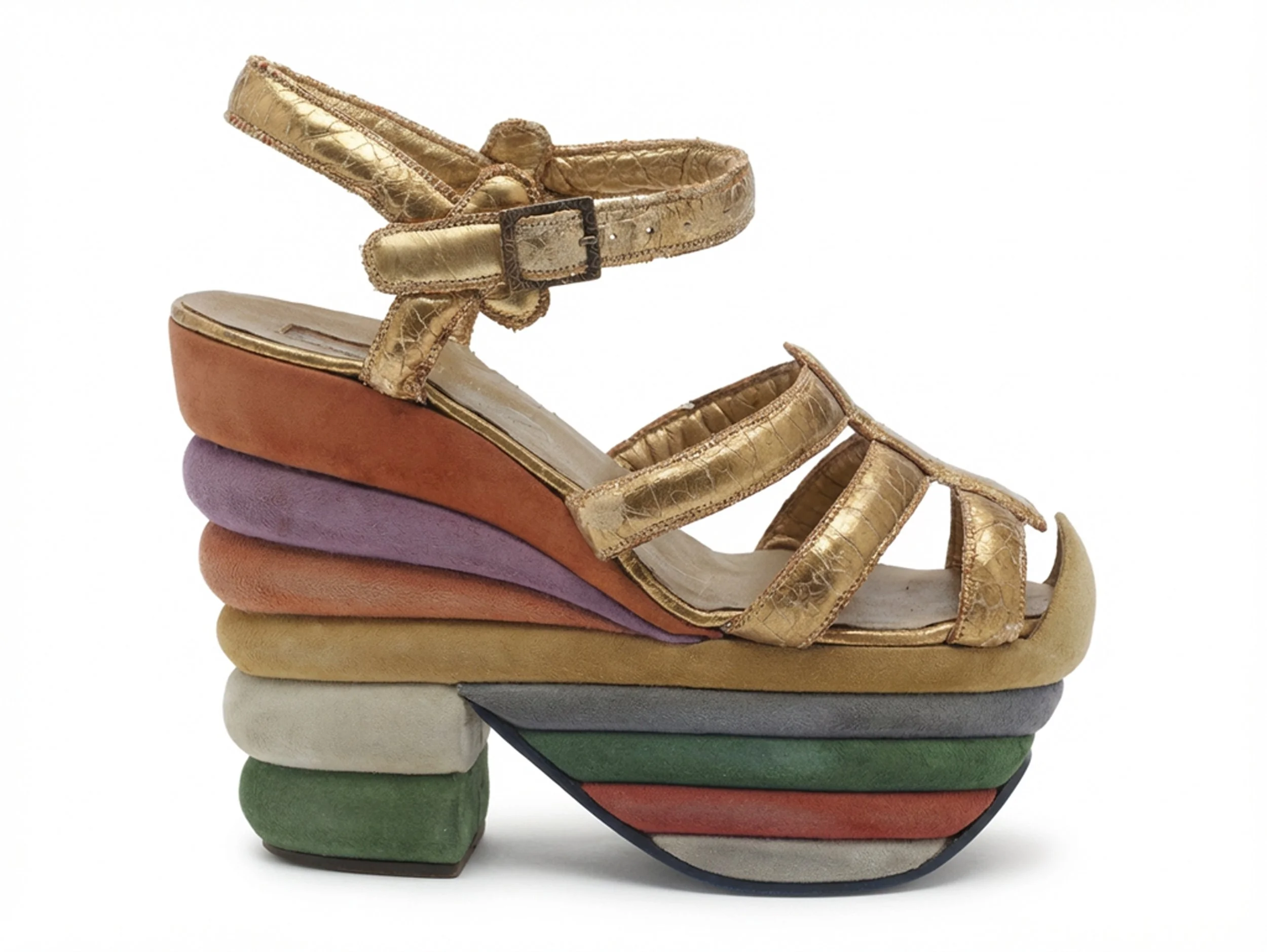
The original Judy Garland shoe
Quote of the week:
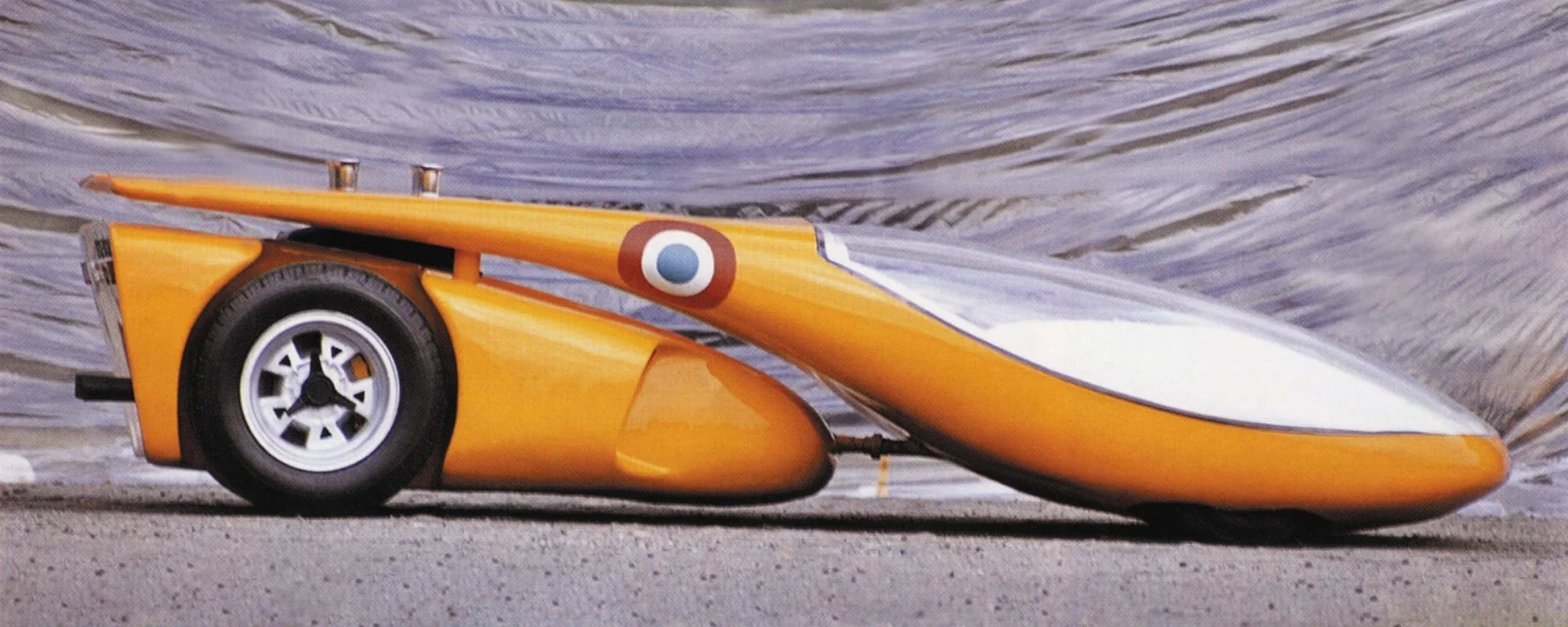
“I am not a designer, I am a philosopher. And all philosophers have said for ages that the world around them is stupid.”
— Luigi Colani, (1928-2019 German product designer) see below...
Made me think:
🧠 Functional Fixedness describes the cognitive bias that limits a person to using an object only in the way it is traditionally used. First studied by Karl Duncker in 1945, it explains why designers who break norms, can create products that feel revolutionary.
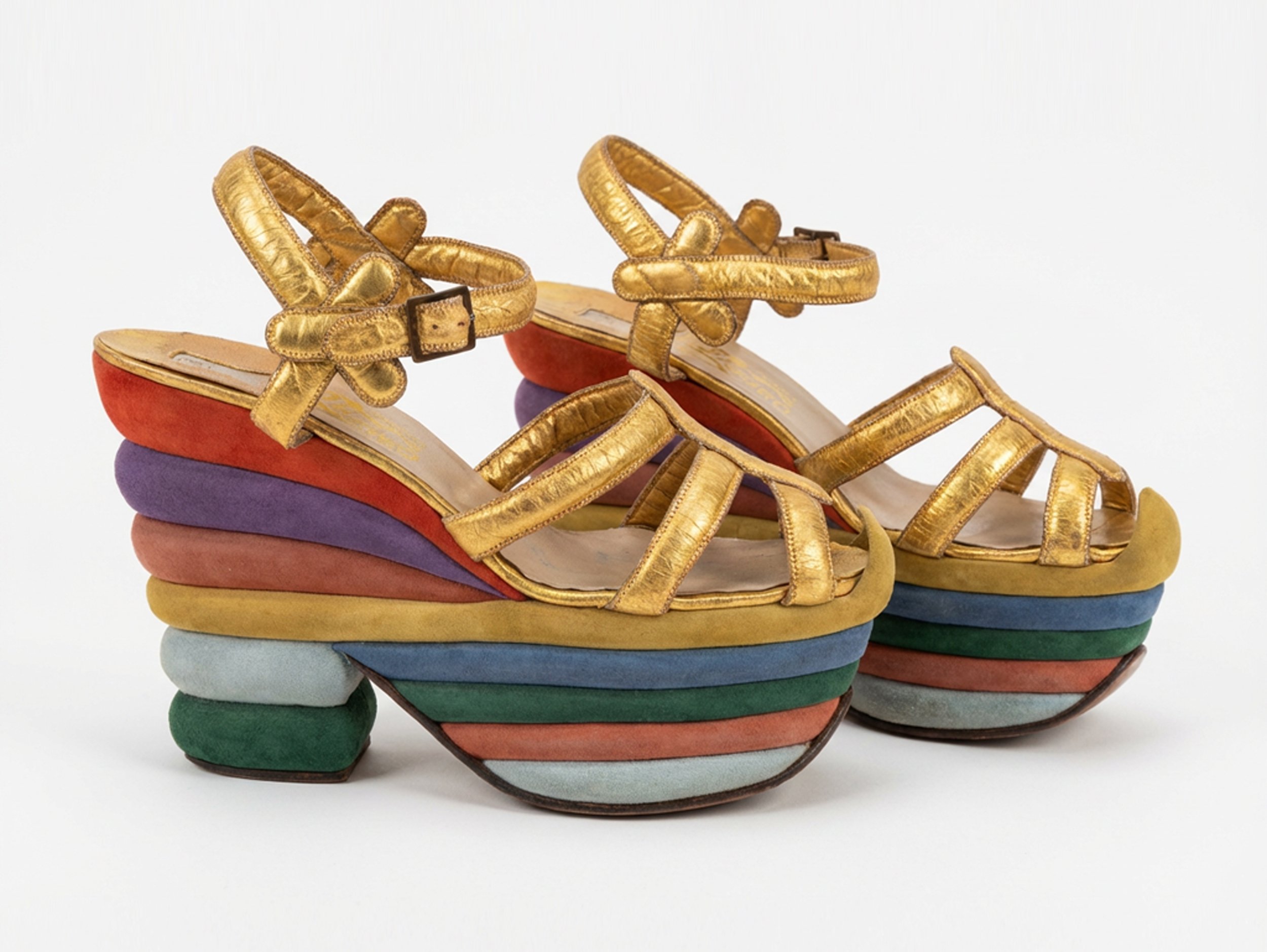
The Ferragamo Sandal Born from Scarcity and Surrealism.
In 1938 Italy, Salvatore Ferragamo was not just a skilled shoemaker, he was a relentless experimenter. At 40 years old, he had already spent more than a decade redefining women’s footwear from his Florence workshop. The world was shifting under his feet. Economic embargoes tied to Italy’s invasion of Ethiopia in 1935 made it difficult for him to find the German steel he relied on for heel shanks, the narrow metal braces that give high heels stability. Instead of retreating, he looked around and saw what others had long overlooked: cork.
Cork was familiar in Italy. It had been used for centuries in Venetian chopines, the tall platform shoes worn by noblewomen during the Renaissance. A material that provided lift without the fragility of metal, cork was lightweight, springy, and abundant. Ferragamo began pressing slabs of Sardinian cork, gluing them together, shaping and sanding until the space between sole and heel was filled, creating one of the first modern wedge heels. In doing so, he did more than solve a shortage; he invented a new form of shoe architecture.
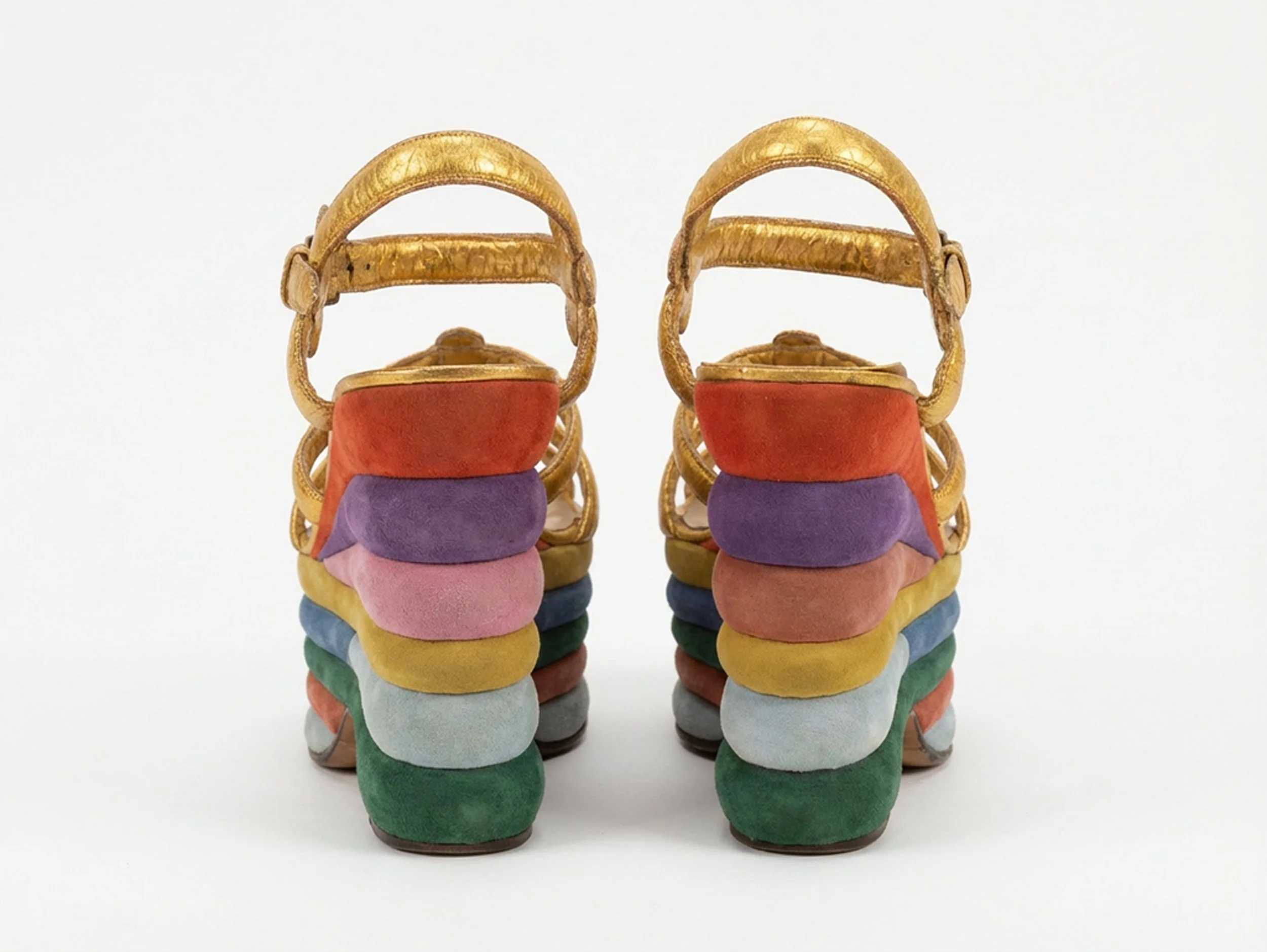
190 cm heel height
Into this wedge he poured color and personality. The sandal that emerged was far from the subdued, linear styles dominating the late 1930s. Covered in rainbow stripes of suede and gold kidskin straps, the shoe was vibrant, unapologetic, and almost surreal. Today it is known simply as the Ferragamo Rainbow, and a key reason the wedge has endured in fashion for decades.
The sandal was created for Judy Garland, then one of Hollywood’s brightest stars, fresh from her groundbreaking role in The Wizard of Oz (1939) where she made the song “Over the Rainbow” iconic. Garland visited Ferragamo in Florence during a European tour, and their collaboration produced this shoe. The connection between her signature song and the rainbow motif may feel inevitable in hindsight, but at the time it was a creative synchronicity that made the shoe resonate culturally as well as visually.
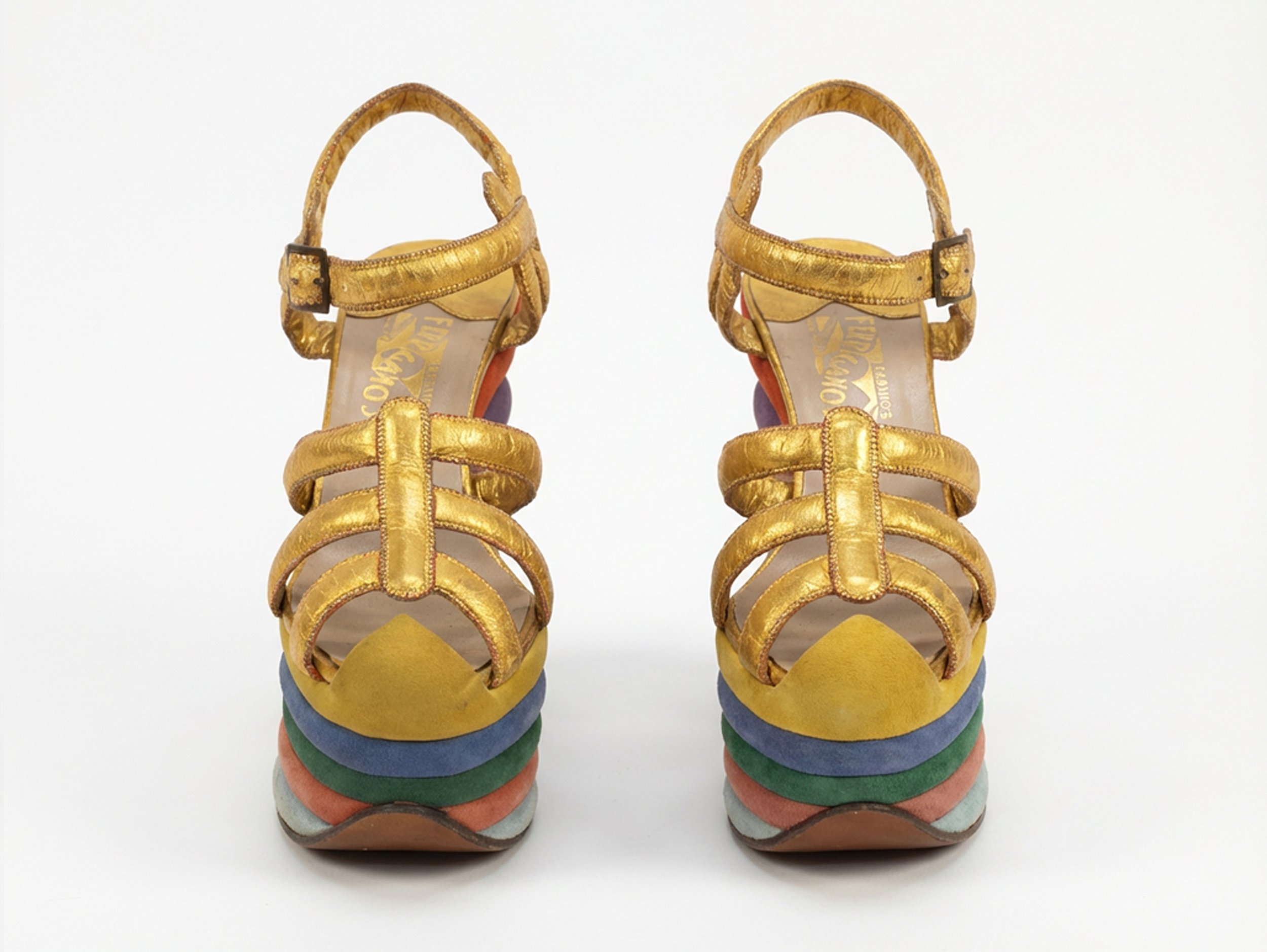
Unlike shoes designed purely for costume or photograph, the Rainbow wedge was crafted with careful artisanal skill in Ferragamo’s Florentine workshop by master craftsmen using traditional tools, lasts made for each client’s feet, and the hand-layered cork wedge that bore his signature emphasis on comfort and fit. The original is now part of the collection at the Salvatore Ferragamo Museum in Florence, where visitors can study it up close as an object that shaped design thinking and footwear evolution.
In the context of 1930s fashion, the Rainbow sandal stood out not just visually but intellectually. Surrealism was influencing art, theatre, and apparel, inviting designers to challenge logic, proportion, and expectation. Ferragamo’s wedge was a three-dimensional exploration of that sensibility, a shoe that felt both grounded in material reality and lifted by the imagination. The wedge provided a broad canvas for colour and texture in a way traditional heels could not, and it appeared in Vogue features and on resort runways as early as 1938, offering a wedge for every occasion from city pavements to evening ensembles.
After the war, when material scarcity lifted, Ferragamo continued exploring cork, wood, raffia, and nylon, and the wedge became a staple in women’s footwear. Even today, designers revisit the shape with updated materials and proportions, most recently reimagined in the 2024 pre‑fall collections that keep the exaggerated silhouette and vibrant palette alive almost 100 years later.
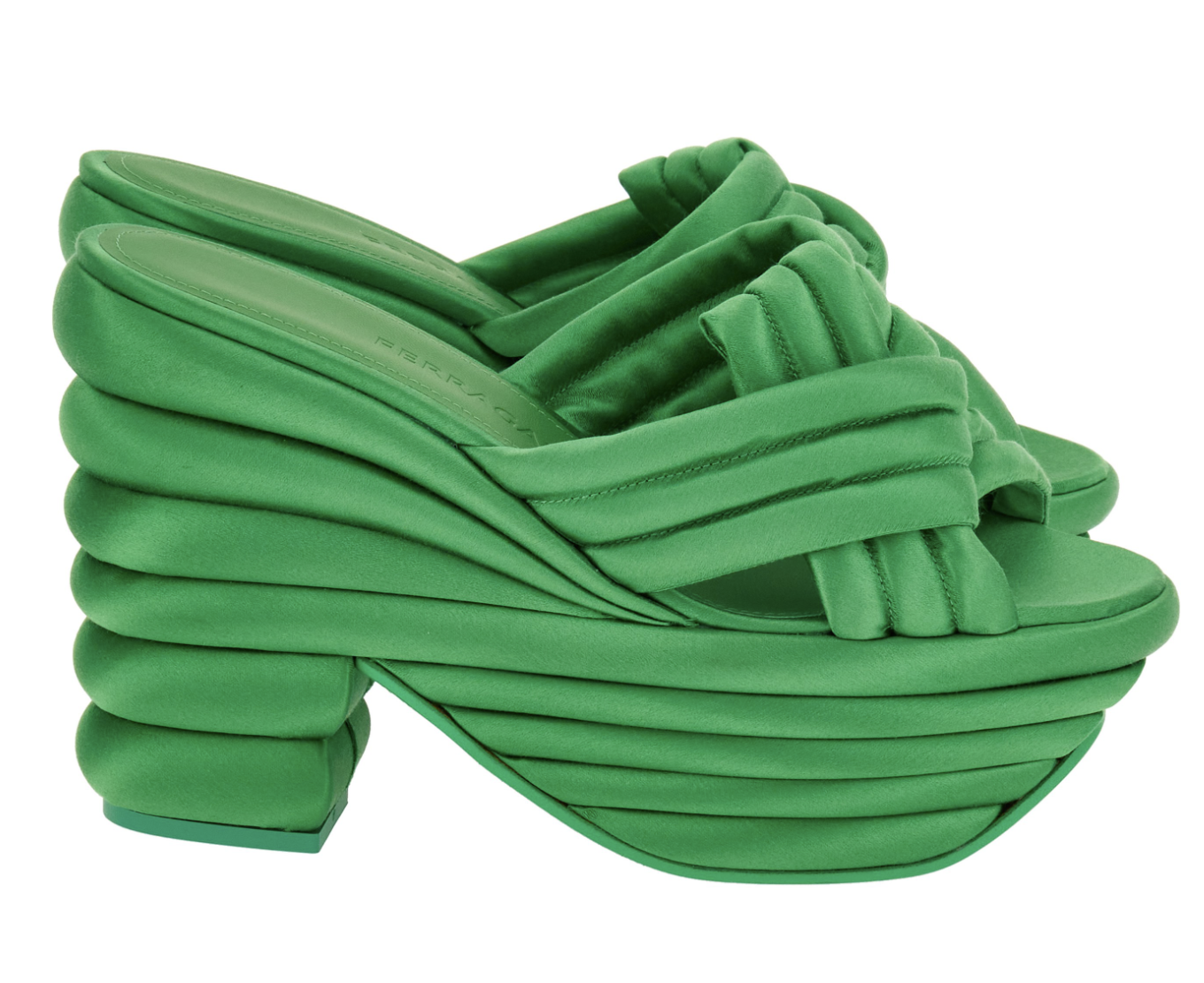
Ferragamo Pre Fall 2024
Question to Ponder
The Rainbow wedge wasn’t just a shoe. It was a product of material scarcity, cinematic inspiration, and avant-garde influence. Judy Garland’s Over the Rainbow was a cultural touchstone, surrealism was reshaping visual language, and Ferragamo responded with a material innovation that was both practical and radical.
So here’s something to consider: When the world constrains design - through politics, materials, or supply, do you follow convention, or do you find a way to turn limitation into design advantage? And if your creation touches another medium-music, film, or art, does it become more than functional, entering the realm of cultural iconography?
My Recommends this week:

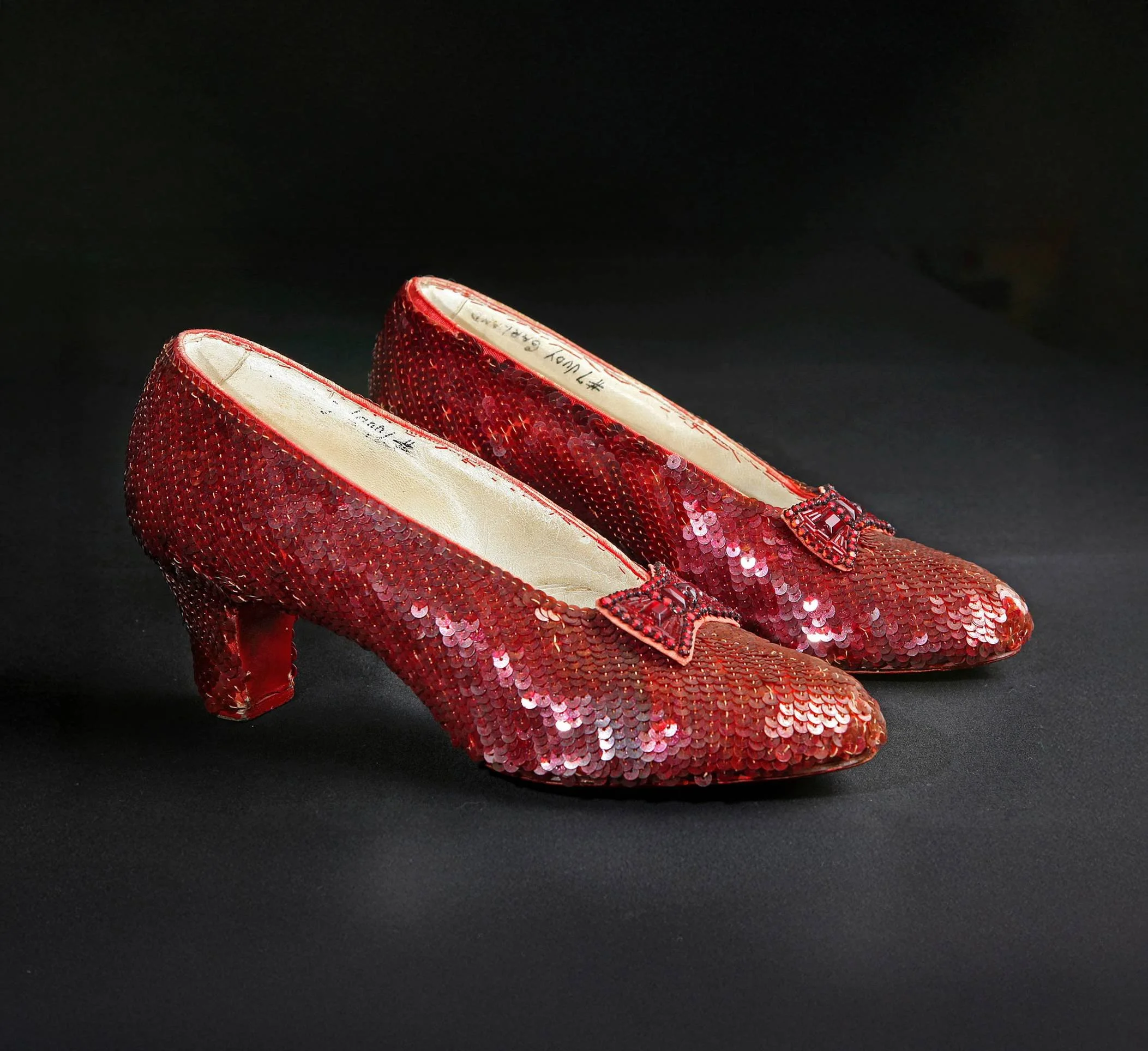
👠 If you liked this… You’ll enjoy our deep dive into the story behind the Judy Garlands Wizard of OZ ruby Slippers
👉 Check it out here
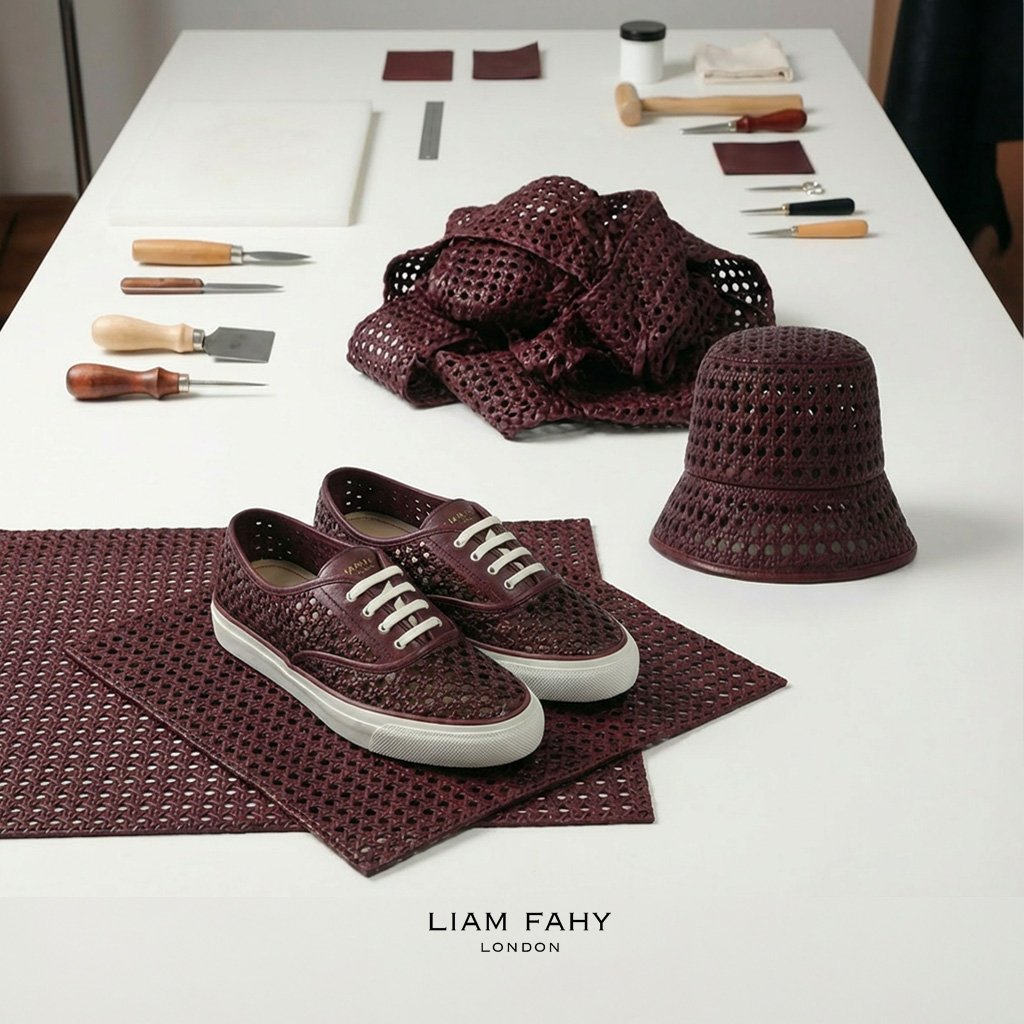
👟 Footwear Prototypes For a deep dive into innovative footwear design where I share original concepts, explore unique shoe materials, and discuss design strategy—all curated for anyone passionate about shoemaking, luxury design, and seeing fresh stuff, check out & follow my LinkedIn feed