The Forgotten Story of Chuck Taylor, Post-Functional Value and the Shoe That Got Famous By Becoming Useless.
Design Ideas and Random Thoughts
Read Time: 4 min
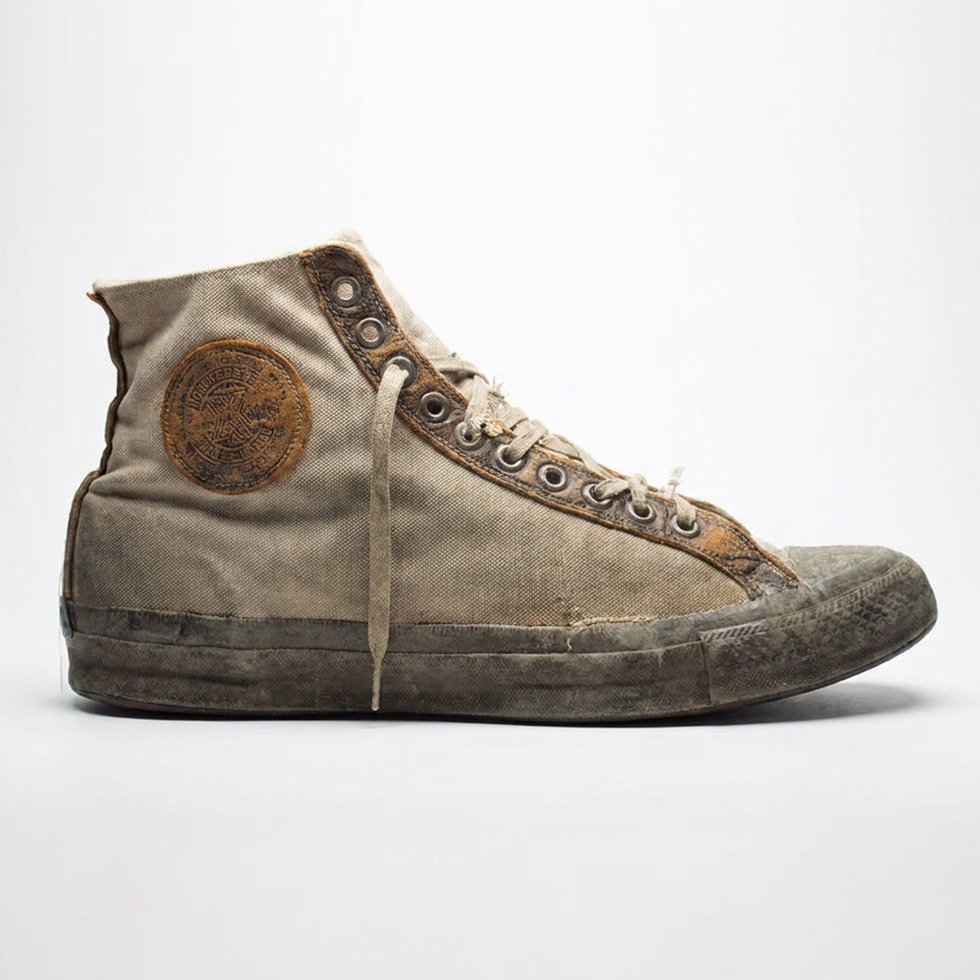
1924 Converse ‘Non Skid’ basketball shoes
Quote of the week:
""The public is more talented than the artist." Andy Warhol
Made me think:
🧠 Post-Functional Value — The phenomenon where a designed object, once obsolete in its original purpose, acquires a new and often more powerful value entirely. The Converse Chuck Taylor is the purest case study in the history of footwear. By 1980 it was medically useless as a basketball shoe. Zero ankle support, no cushioning, flat sole. Every serious player had already moved on to Nike and Adidas. That is precisely the moment it became a global cultural icon, worn by punks, artists, students and eventually everyone on earth. The shoe did not become iconic despite being useless. It became iconic because of it.
The Shoe That Got Famous By Becoming Useless.
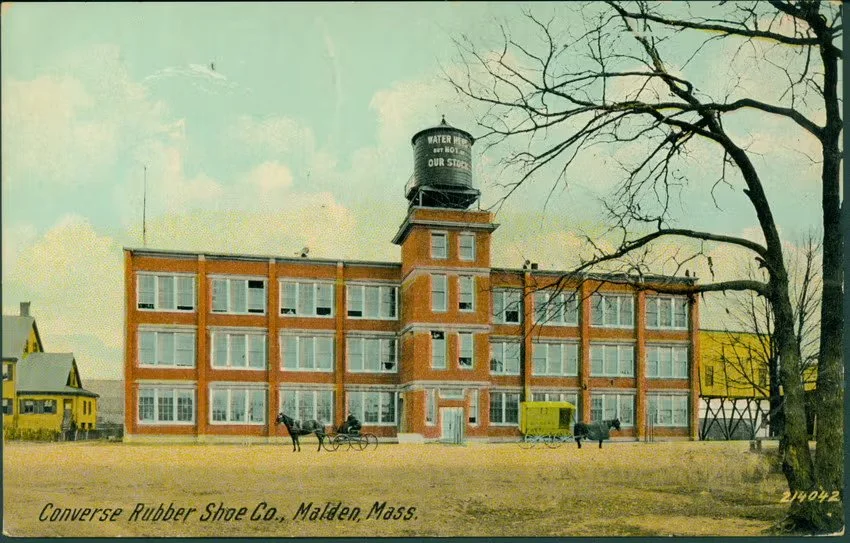
In 1917, the Converse Rubber Shoe Company of Malden, Massachusetts, released a canvas high-top basketball shoe with a vulcanised rubber sole and a reinforced ankle patch. Its original name was not the All Star. It was called the Converse Non-Skid. The brief was purely functional: grip a hardwood court without marking it. It cost $1.35 a pair. Converse sold 110,000 pairs in the first year.
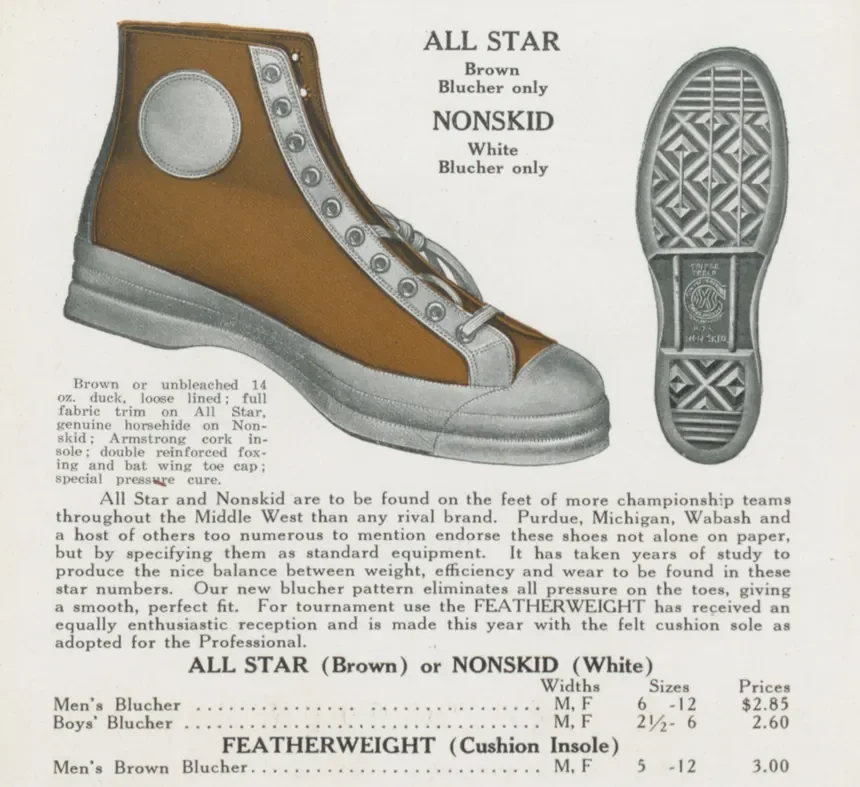
Early Advert for the Non Skid Converse
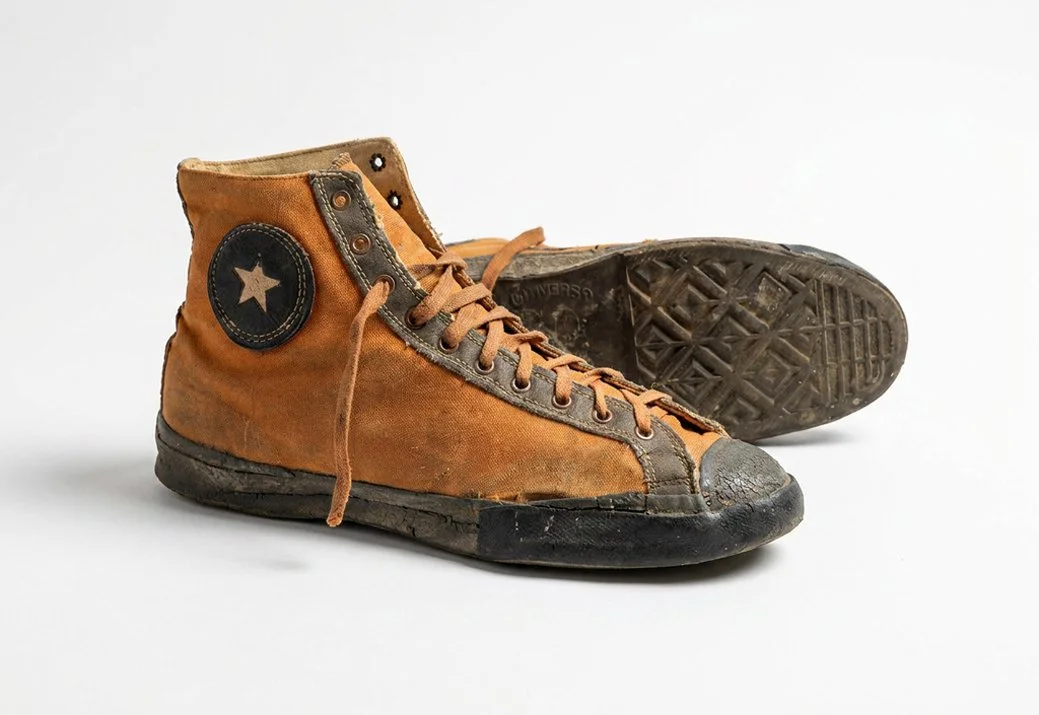
1917 Converse All Stars Basketball shoes
The design details were more considered than most people realise. The diamond-patterned sole was engineered specifically for traction during fast stop-and-go movements. The rugged toe guard was there to protect against the kind of lateral impacts basketball generates. The small eyelets just above the insole medial side, which most people assume are decorative, were ventilation points, designed to allow airflow during gameplay. And the ankle patch, the most iconic piece of branding in sneaker history, was not originally branding at all. It was a reinforced support panel, placed on the inside of the shoe to provide additional lateral ankle stability. It only became a branding asset in 1932, when a salesman named Chuck Taylor signed his name on it.
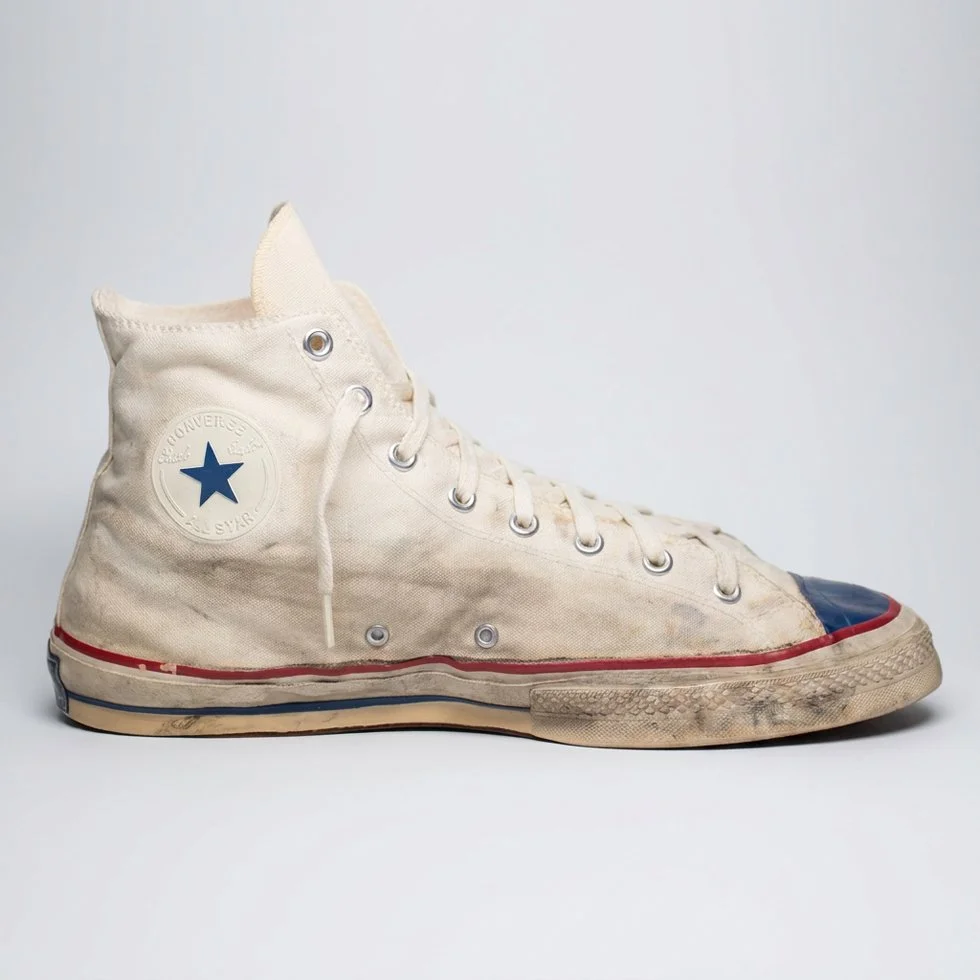
1959 Chuck Taylor weighted All Star Converse (Getty images)
There was also, at one point, a Converse All Star Trainer: a weighted training version with a navy blue toe cap, weighing approximately two pounds per shoe, designed to strengthen legs during practice. Almost nobody knows it exists.
Charles "Chuck" Taylor walked into the Converse factory in Chicago in 1921 and complained that his feet hurt. He was given a job as a salesman. Over the next forty-four years, he drove a car with a Converse logo painted on the side across every state in America, running basketball clinics for school children, coaching players at the professional level, and building the All Star into the default shoe of American basketball. He became the world's first sponsored athlete, the original sneaker ambassador, a one-man marketing operation who did more for the brand than any advertising campaign in the company's history.
In those four decades, Chuck Taylor never received a single penny in royalties.
He received a salary, a car, and the honour of having his name on an ankle patch that had started life as a support panel. By the time he died in 1969, every basketball player in America had learned the game in Chuck Taylors, every school gym had boxes of them, and his name had become so embedded in the product that most people assumed Chuck Taylor was the brand rather than the man. He died with almost nothing. The shoe bearing his name is now the best-selling sneaker in history, with over 1 billion pairs sold across 144 countries.
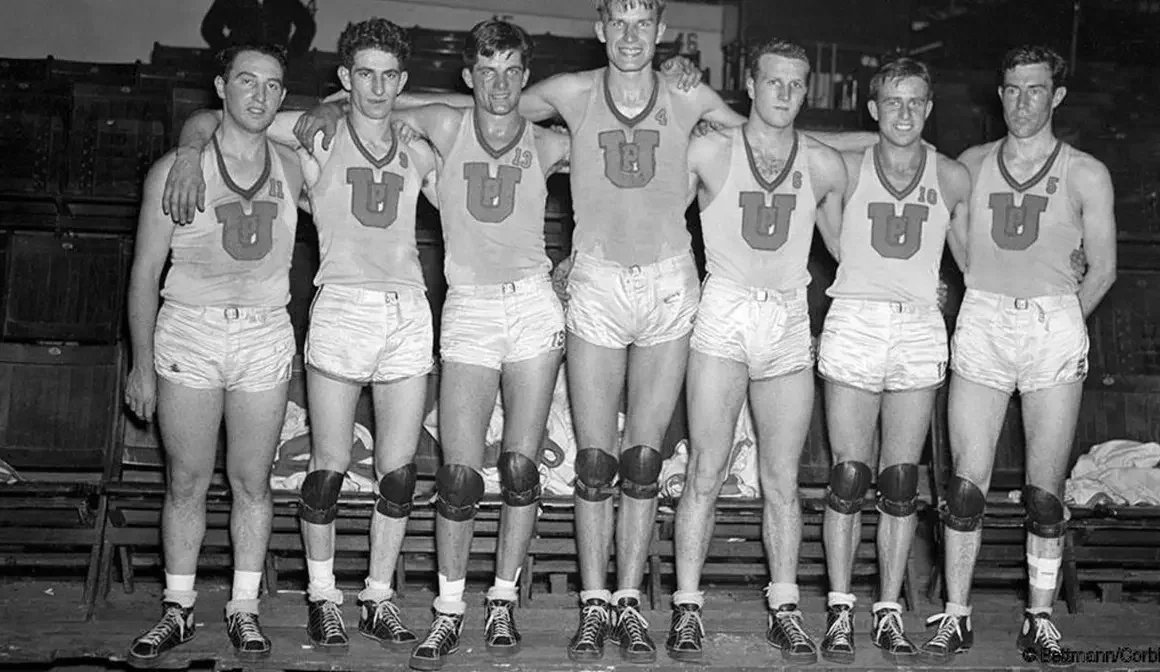
The All Star Basketball team circa 1930’s
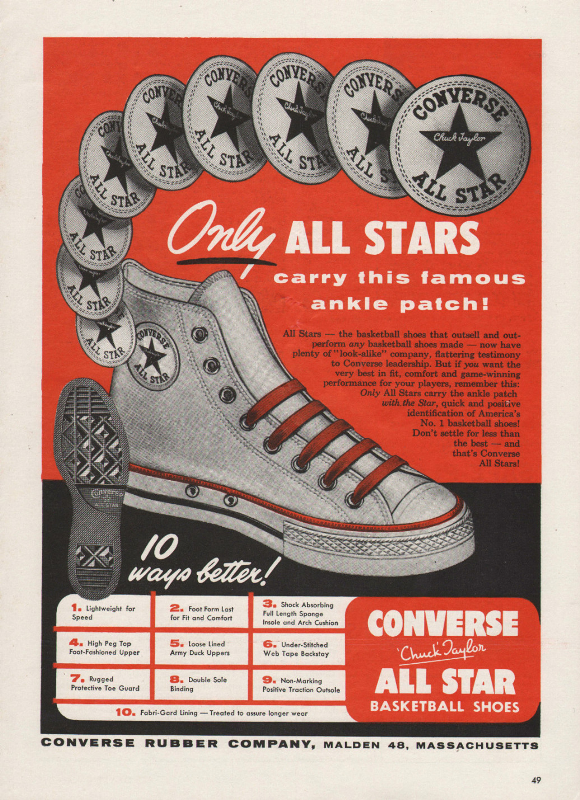
Converse ad showing the ‘famous Signed Patch’
By the late 1970s, the Chuck Taylor had a problem. Sports science had arrived. Nike was investing in cushioning, ankle support and biomechanical research. Adidas was following. Medical studies began to show that playing basketball in a flat canvas shoe with no lateral support was actively bad for your joints. Coaches stopped recommending them. Players stopped wearing them competitively. Between 1976 and 1986, Converse's market share of the basketball shoe market collapsed from over 80% to less than 5%.
In purely functional terms, the Chuck Taylor was finished.
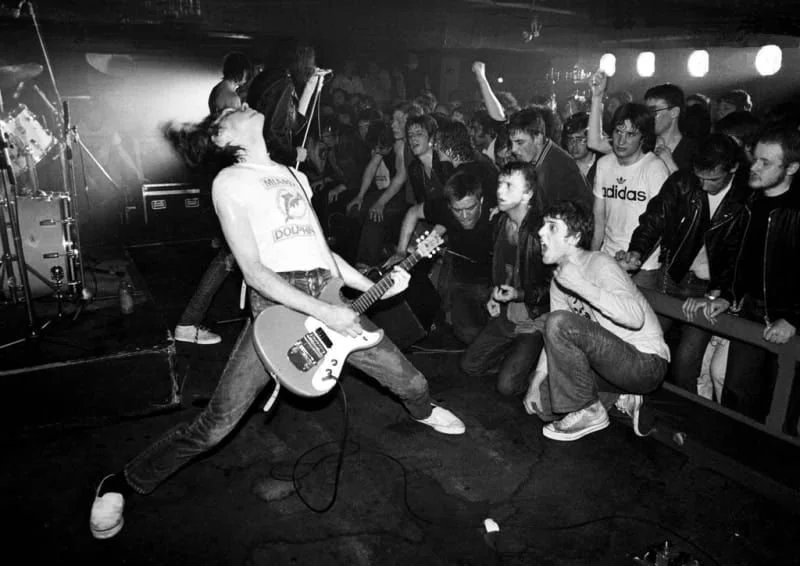
The Ramones 1970’s in All Stars (Getty)
Here is what happened next. Punk happened. Art school happened. The downtown New York scene happened. Independent film happened. Skate culture happened. All of them found the same shoe: cheap, flat, simple, utterly without corporate polish or performance pretension. The very qualities that made the Chuck Taylor medically obsolete for basketball made it perfect for every subculture that wanted to signal its distance from mainstream consumerism. It cost $15. It came in every colour. It had no air unit, no carbon plate, no technology of any kind. In a world of increasingly engineered footwear, its complete lack of engineering became its identity.
By the 1980s the Chuck Taylor had been claimed by punk, indie rock, hip hop, skateboarding and art school simultaneously. By the 1990s it was on the feet of everyone from Kurt Cobain to Hunter S. Thompson to Michelle Obama. The shoe had not changed in any meaningful way since 1917. Among sneakerheads and Converse purists, the unspoken rule became simply: don't mess with the Chuck.
In 2001, Converse filed for Chapter 11 bankruptcy. The company that had once owned 80% of the American basketball shoe market owed $195 million in debt and had no coherent plan to compete with Nike, Adidas or Reebok in performance footwear. Its most valuable asset was the very shoe that had been functionally obsolete for twenty years.
In 2003, Nike acquired a bankrupt Converse for $305 million. Nike's instinct with every brand it owns is to innovate aggressively, push performance and justify premium pricing. What Nike did with Converse was almost nothing. They kept the price accessible. They left the silhouette unchanged. They did not put Air in it, a carbon plate, or a Flyknit upper. They made sure it was widely available in every colourway imaginable and let the cultural engine that had been running without them since 1980 keep running.
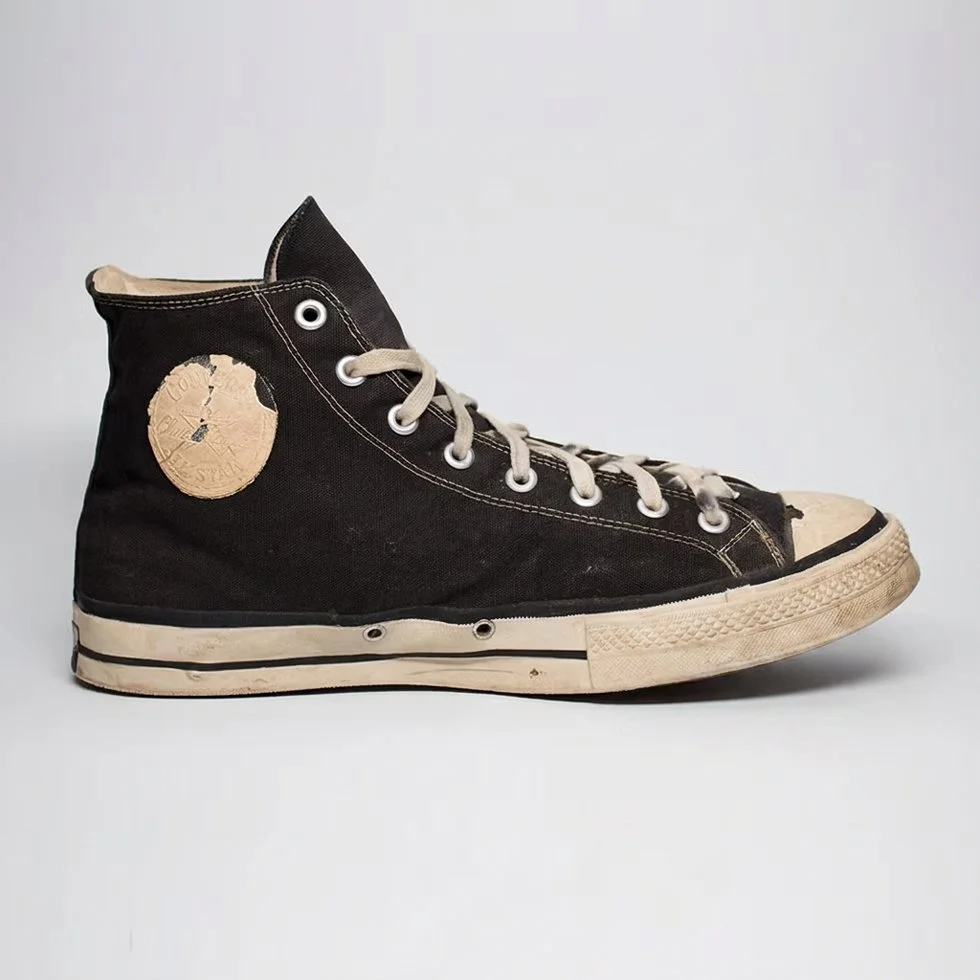
1950's Chuck Taylor All Stars (credit Nike/Converse)
The result: Converse now generates over $2 billion a year in revenue for Nike. It is Nike's most profitable subsidiary by margin. The most important decision Nike ever made about Converse was to understand that the shoe's value existed entirely outside the product and act accordingly. The hardest design decision they ever made about it was to not design it at all.
Chuck Taylor never saw any of this. He died in 1969 with his salary, his car and his name on an ankle support panel that had accidentally become the most recognised piece of branding in sneaker history. In 2014, forty-five years after his death, his estate received its first royalty payment after a lawsuit settlement. The amount was not disclosed.
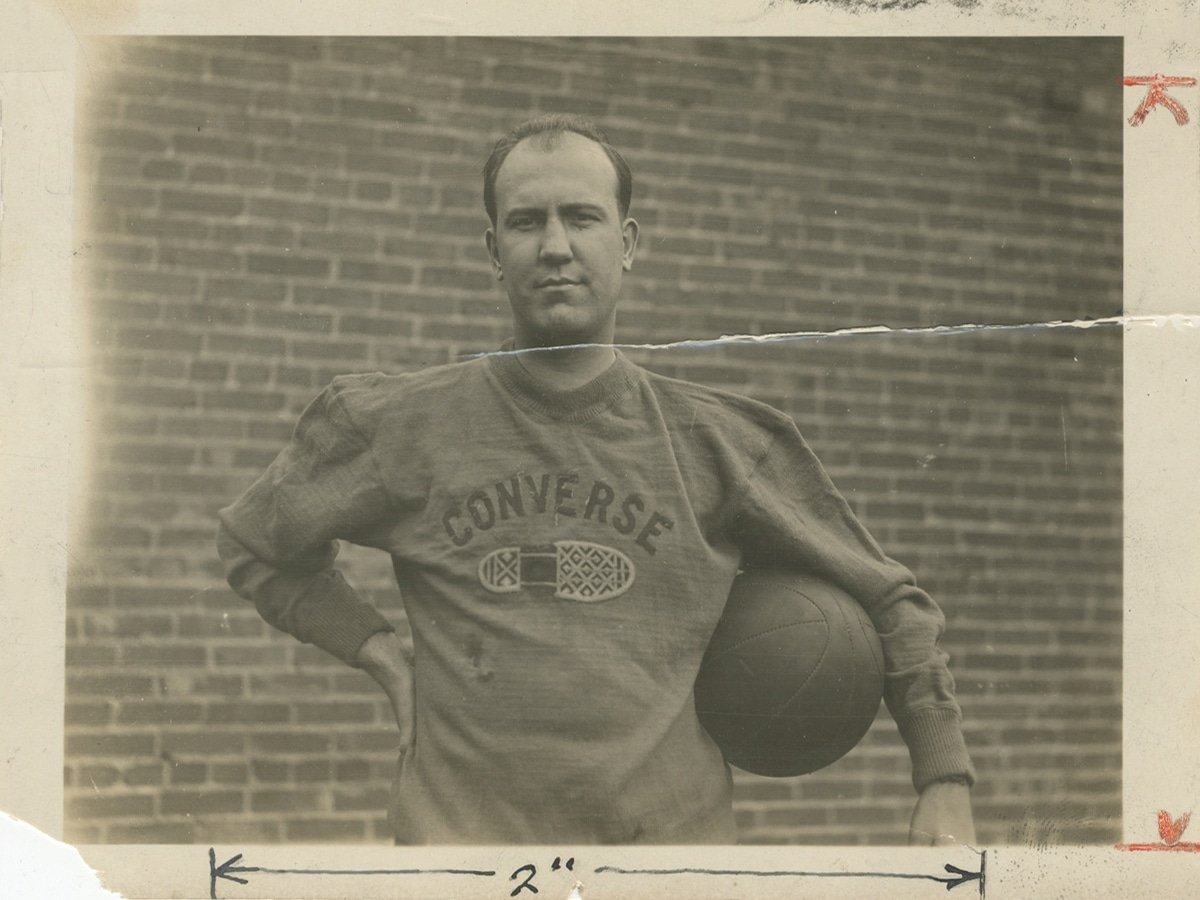
The Legend of Chuck Taylor
Question to ponder:
Chuck Taylor spent forty-four years building the value of a shoe he had no financial stake in. Nike spent twenty years doing almost nothing and made two billion dollars a year from the same shoe.
The ankle patch that everyone thinks of as branding started as a structural support element. The ventilation eyelets that look decorative were engineering decisions. The shoe that defined casual cool was designed for professional sport.
Post-functional value is the most powerful force in the consumer goods industry and almost no one designs for it intentionally. Can you? Is it possible to design an object for a future cultural life you cannot predict? Or does it only happen to shoes that stop trying?
My Recommends this week:

📰 Newspaper Club — The best tool for telling your brand's story in print. Newspaper Club lets you design and print your own newspaper, from a single copy to thousands, in broadsheet, tabloid, midi or mini format. Used by Adobe, New Balance, Liberty and the Financial Times among others. For any designer or brand thinking about how to communicate something physical and lasting rather than another PDF, this is worth knowing about. The tactile quality of newsprint does things that a screen simply cannot.
👉 Check it out here
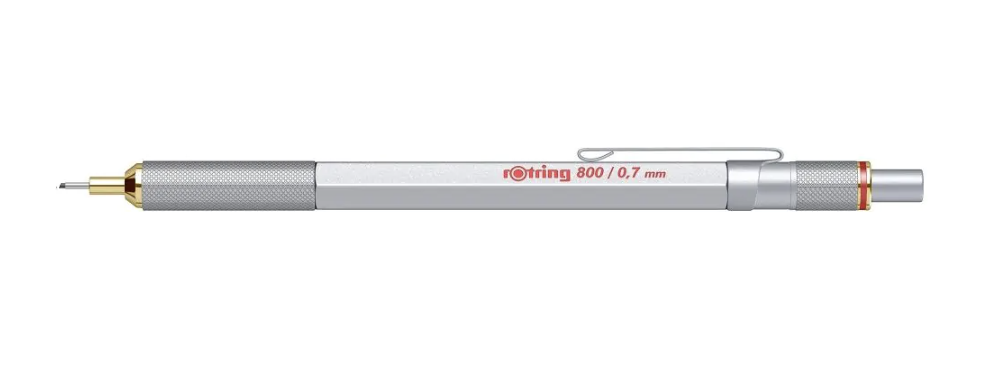
✏️ rOtring 800 Mechanical Pencil 0.7mm — Recently become my go-to for finer lines after years of trying everything else. £72.85, silver, 21 grams, hexagonal barrel that never rolls off the desk, and a twist-and-click retractable sleeve that protects the tip in your pocket. Perfectly weighted for long design sessions in a way that lighter pencils simply are not. The kind of object that makes you want to draw. Available with free engraving if you want to make it a gift worth keeping.
👉 Check it out here

🎙️ The Tim Ferriss Show, episode with Rick Rubin — A three-hour conversation with the most influential record producer alive about creativity, constraints, the creative process and how to make things that last. Rubin has never learned to play an instrument or read music. His entire value is the ability to identify what is essential and remove everything else. For designers, it is one of the most transferable conversations about the creative process available anywhere for free.
👉 tim.blog/rick-rubin
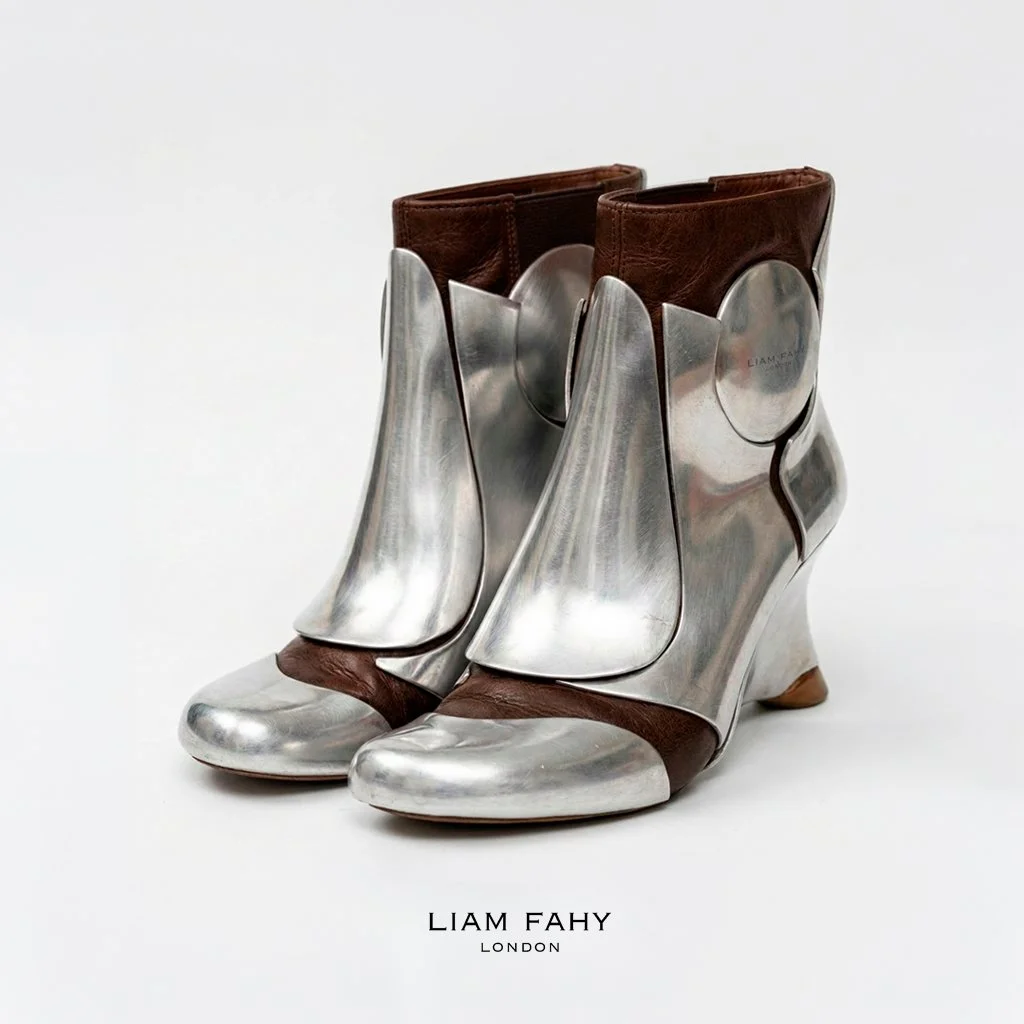
👟 Footwear Prototypes For a deep dive into innovative footwear design where I share original concepts, explore unique shoe materials, and discuss design strategy—all curated for anyone passionate about shoemaking, luxury design, and seeing fresh stuff, check out & follow my LinkedIn feed