Design Ideas and Random Thoughts
Read Time: 3-4 min
Quote of the week:
“The art of being wise is the art of knowing what to overlook.” - William James
Made me think:
🧠 Path Dependence - Developed in the 1980s by economist W. Brian Arthur and economic historian Paul David, path dependence is the idea that once a process or technology becomes dominant, often for arbitrary or historical reasons, it tends to lock in, even if better alternatives exist. In simple terms: the past shapes the future, not because it’s optimal, but because it’s already established. Systems, habits and even entire industries follow the trail of least resistance… the one already trodden.
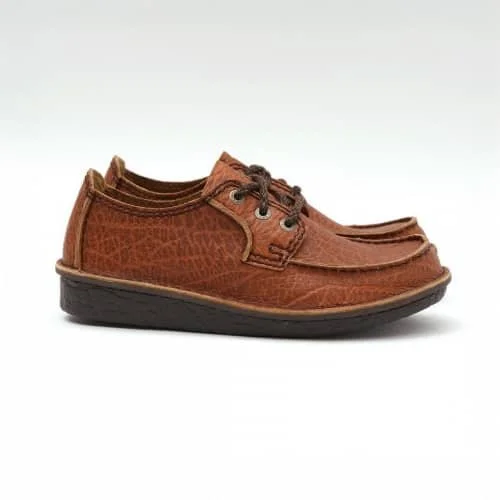
The Lost Brother of the Desert Boot
You know the Clarks Desert Boot, that suede icon of post-colonial cool. But few remember its forgotten, otherworldly sibling: the Polyveldt Oberon.
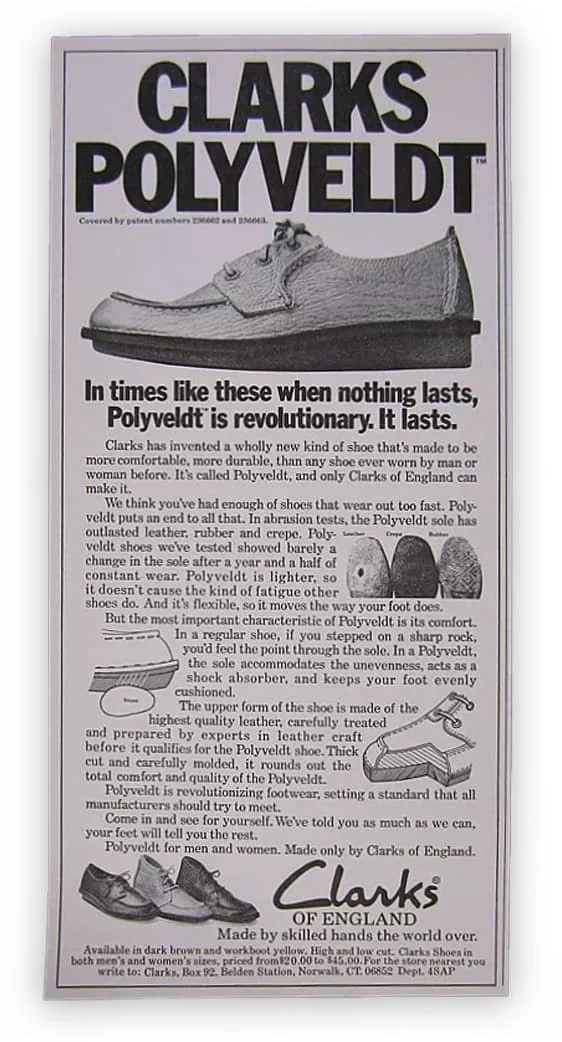
Released in the mid-1970s and made in West Germany, the Oberon sat within Clarks’ Polyveldt range, built on the patented Polyveldt sole Clarks introduced in 1974: a softer, more durable and more comfortable alternative to crepe. If the Desert Boot belonged to dusty cafés and mod clubs, the Oberon was post-industrial: sharp-edged, super comfortable, and strange. A silhouette that felt prehistoric and futuristic at once.
And then there’s the name: Oberon, king of the fairies. Not just marketing fluff. Inside the heel, on the sock, early pairs carried the image of Glastonbury Tor, Clarks’ long-standing quality mark and, in local legend, an entrance to the fairy underworld. It’s an oddly poetic choice from a Somerset shoemaker, as if they knew this wasn’t just a casual shoe. It was a statement, or maybe a symbol.
For all its mythic roots, though, it became something deeply ordinary: the geography teacher shoe, worn with flared Wranglers and corduroy blazers, spotted in staff rooms and suburban pubs. But by the 1980s, that quiet awkwardness turned cool. Post-punk and ska kids adopted the Oberon’s thick-soled, unfussy shape. It sat neatly alongside second-hand army gear, Fred Perry polos and dub records. A misfit made right.
It was an evolution of the Desert Boot silhouette (suede, crepe-style sole, chukka-esque shape) but the vibe was completely different. No longer a shoe for North African sands or mid-century rebels, the Polyveldt had a utilitarian edge that spoke to changing times: more post-industrial Sheffield than Marrakesh.
It gained quiet popularity in parts of Europe, especially among subcultural dressers who appreciated its chunky profile and stitch-free logic. Today, it’s a rare find. You won’t see it on Clarks’ timeline (I don’t think), and reissues have been rare, but a few vintage collectors in Germany, the UK and Japan still treasure it.
Its disappearance raises an interesting question:
What happens to good ideas when they don’t fit the narrative?
My Recommends this week:
🎧 Listen to: Clarks by Vybz Kartel ft. Popcaan & Gaza Slim (2010)
Clarks shoes, particularly the Desert Boot, Wallabee and "Bank Robber", aren’t just footwear in Jamaica; they’re a cultural institution. Since the 1960s, Clarks have symbolised style, respect and status in Jamaican society. Wearing a crisp pair of Clarks could mean you’d "made it."
👉 Check it out here
🤖 China’s $6K Humanoid Robot Might Change Everything
Meet the Unitree R1, launched in July 2025: a roughly 4-foot-tall humanoid robot priced under $6,000 (about £4,500). With 26 joints, multimodal AI and gymnast-level mobility, it’s the first full-featured robot that looks like it belongs both in a lab and your living room. While it doesn’t do chores (yet), it flips, runs, recognises faces, talks, and might just kick off a wave of affordable humanoid assistants around the world.
👉 Check out the video here